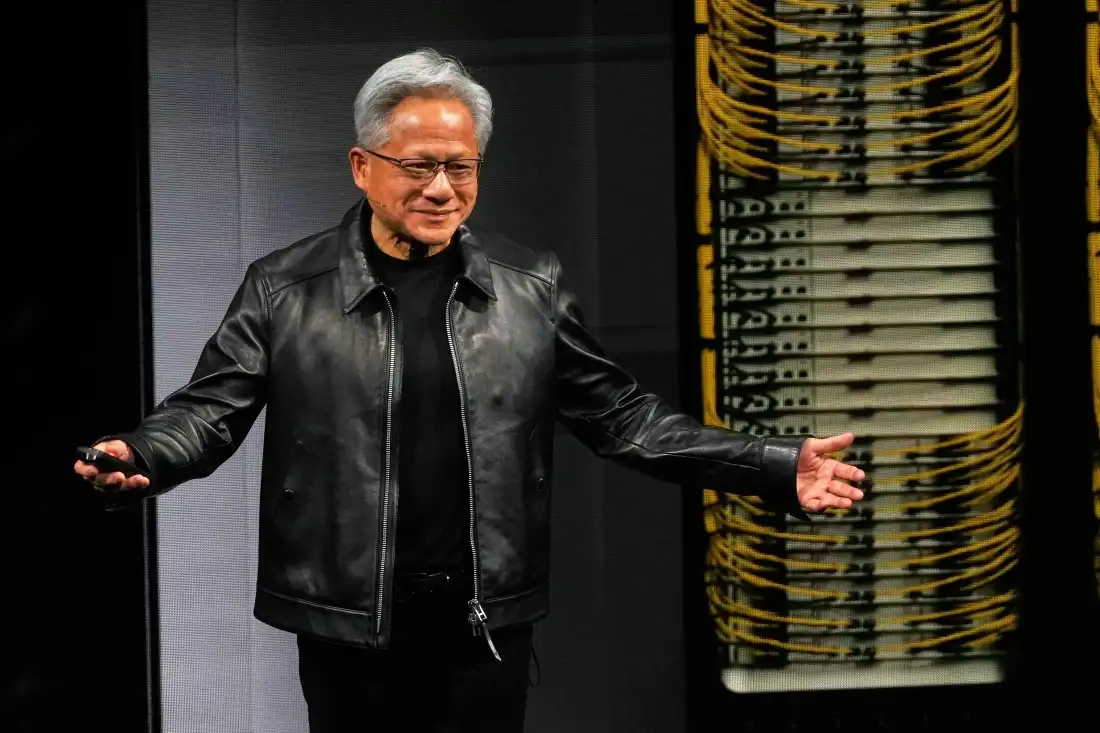
Nvidia’s board of directors has initiated an independent investigation into CEO Jensen Huang following recent reports alleging he was targeted by a foreign intelligence effort, the company confirmed on Sunday, November 8, 2026. The announcement came as Huang admitted to the board and in a message to employees that he was “unfaithful to my wife” and took “full responsibility” for his actions.
The investigation follows allegations, initially reported by The New York Times, that Huang developed a close relationship with Alice Huang, an executive at Singapore-based data center firm Megaspeed, whom US intelligence agencies suspect was providing information to Beijing. Jensen Huang and Alice Huang are not related.
Allegations and Congressional Scrutiny
Reports indicate that US intelligence agencies had concluded Alice Huang was acting as a Chinese intelligence asset, funneling commercial information to Beijing. These concerns had reportedly reached high levels of the US government months ago, with a classified memo drafted under Secretary of State Marco Rubio’s supervision. Despite these warnings, Huang remained an influential voice shaping the Trump administration’s AI policy, often arguing against broader restrictions on AI chip exports.
The developments have intensified scrutiny on Nvidia’s CEO. Three senior US Republican lawmakers—House Foreign Affairs Committee Chairman Brian Mast, China Select Committee Chairman John Moolenaar, and House Intelligence Committee Chairman Rick Crawford—formally requested Huang attend a closed-door congressional briefing. The request, announced on November 5, 2026, seeks answers regarding these allegations and Nvidia’s security protocols against foreign espionage.
Nvidia’s Response and Ongoing Inquiry
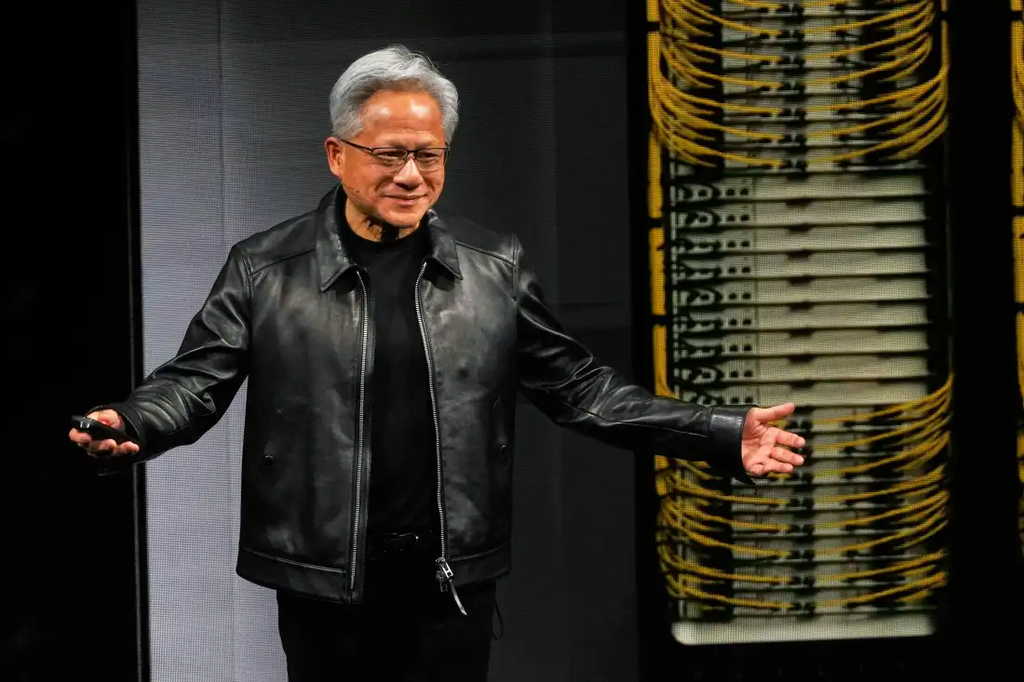
In its statement, Nvidia’s board asserted it has “no reason to believe that either national security or Nvidia secrets were compromised.” However, it stated that the inquiry will thoroughly examine all available information. Jensen Huang has publicly committed to fully supporting and cooperating with the investigation.
Huang also addressed his personal conduct in a message to Nvidia employees, stating, “I was unfaithful to my wife. My actions hurt her and our children. There is no excuse for what I did. I am deeply sorry.” He emphasized his commitment to the company and to supporting America’s national security.
Jensen Huang will continue in his role as CEO during the ongoing investigation. The board’s independent directors will oversee the probe, assisted by external independent counsel.
Market Reaction and Business Implications
The news sent ripples through financial markets, with Nvidia’s stock (NVDA) dipping 5% in early premarket trading on Monday, November 9, 2026, reflecting investor unease over the situation. Analysts suggest the incident could lead to increased regulatory scrutiny and potentially affect the company’s export-control compliance, particularly concerning advanced chips to China.
The company’s relationship with Megaspeed is also under review. Megaspeed has reportedly purchased over $4.8 billion worth of Nvidia chips in the past two years, establishing itself as one of Nvidia’s largest customers in Southeast Asia. The US Department of Justice is reportedly investigating potential smuggling of Nvidia chips to China, a concern that previously prompted surveillance of Alice Huang.
Nvidia’s Expanding AI Infrastructure
Despite the unfolding controversy, Nvidia continues to push forward with its expansive artificial intelligence initiatives. On November 6, 2026, the company announced a strategic collaboration with Apollo Global Management to repurpose defunct telecom facilities into small AI data centers across 20 states in the United States. This network aims to provide alternative computing solutions for Nvidia and its clients, focusing primarily on running established AI models rather than training new ones. The deployment of Nvidia’s Vera Rubin servers in these upgraded facilities is anticipated by early 2027.
Further demonstrating its global reach, Nvidia also announced an expanded collaboration with South Korea’s Ministry of Science and ICT on November 9, 2026. This partnership will encompass AI chips, data centers, AI models, skills development, and agent security. Specifically, the hardware project involves connecting Rebellions’ R200 neural processing units (NPUs) to Nvidia’s platform via NVLink Fusion and utilizing the MGX architecture for rack-scale system development. SK Telecom plans to deploy these systems in its AI data center by 2028, integrating them with its proprietary AI models and public-facing services.
Global Resonance of the Story
The gravity of the situation surrounding Jensen Huang and Nvidia is evident in its widespread international coverage. News outlets in Sri Lanka, for instance, have prominently reported on Nvidia’s decision to launch an independent investigation into its CEO, underscoring the global interest and perceived significance of the developments within the technology and geopolitical spheres.