
In a significant move to maintain its non-aligned foreign policy, Sri Lanka has denied a request from the United States to land two combat aircraft at the Mattala Rajapaksa International Airport (MRIA).
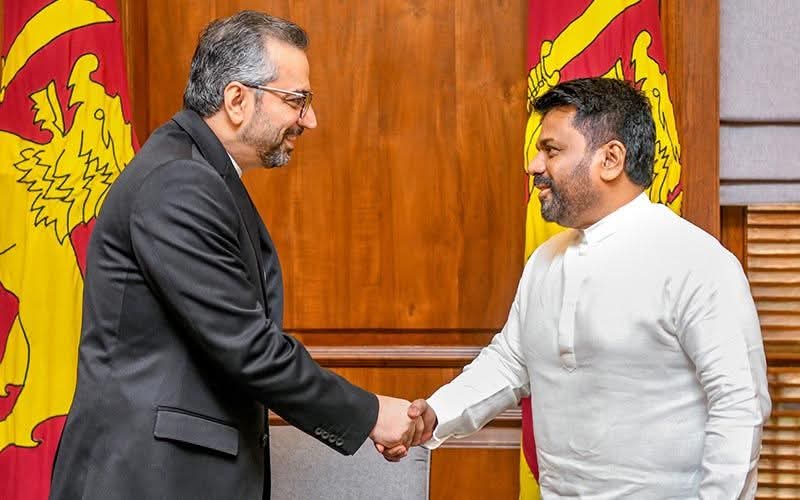
Addressing Parliament, President Anura Kumara Dissanayake confirmed that the request was made on February 26, just two days before the escalation of military tensions between the US, Israel, and Iran. The US had sought permission to land two warplanes, reportedly carrying eight anti-ship missiles from a base in Djibouti, between March 4 and 8.
Balancing Global Pressures
President Dissanayake noted that the government faced considerable pressure but remained firm in its stance. He revealed that on the same day the US made its request, Iran had also requested permission for three naval vessels to conduct a “goodwill visit” to Sri Lanka.
To ensure the country did not appear to take sides in the intensifying Middle Eastern conflict, the Sri Lankan government denied both requests.
”With two requests before us, the decision was clear,” the President told lawmakers. “Had we said ‘yes’ to Iran, we would have had to say ‘yes’ to the US as well. We turned down the requests to maintain Sri Lanka’s neutrality.”
Context of Regional Tensions
The decision comes at a time of high geopolitical volatility. Recently, the Sri Lankan Navy played a crucial role in humanitarian efforts, rescuing 32 Iranian crew members from the IRIS Dena after it was reportedly struck by a US submarine off the coast of Sri Lanka. Shortly after, the Navy also assisted in the evacuation of over 200 crew members from a second Iranian vessel, the IRIS Bushehr.
As global powers like Switzerland also move to halt arms exports to avoid entanglement in the conflict, Sri Lanka’s refusal to host foreign warplanes underscores its commitment to remaining a neutral zone in the Indian Ocean.
The President’s statement was met with widespread approval in Parliament, signaling a unified domestic front on the nation’s “Friendship to all, enmity to none” foreign policy.
Source: Al Jazeera