buddy net controversy in grade 6 module
Colombo, Sri Lanka – December 31, 2025 – The controversy surrounding an inappropriate web link (buddy net) discovered in a newly introduced Grade 6 module of English language has escalated dramatically, with the Ministry of Education formally lodging a complaint with the Criminal Investigation Department (CID) today. This move signals a deeper probe into what top officials suspect might be more than just a technical error, hinting at a potential conspiracy to undermine the government’s ambitious education reforms.
Immediate Suspension and Alarming Discovery
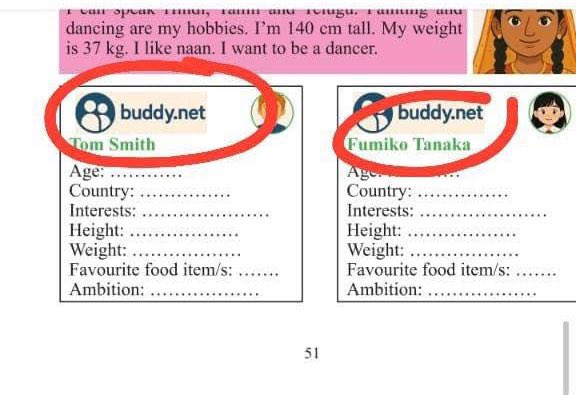
The incident, which sent ripples of concern across the nation’s educational landscape, came to light after social activist Thilini Shalwin drew attention to a glaring error. It was revealed that a typing mistake, replicated in three separate instances within the new Grade 6 syllabus, redirected users not to the intended educational application, but instead to “Buddy.net,” a social networking platform primarily designed for gay men.
Upon receiving the complaint, the Ministry of Education acted swiftly. A preliminary internal review confirmed the presence of the unsuitable content, prompting the immediate suspension of the distribution of all affected printed modules.
Secretary to the Ministry of Education Nalaka Kaluwewa confirmed that the module, prepared by the National Institute of Education (NIE), had already been printed and was in the process of distribution when the alarming error was detected.
Conspiracy Theories Emerge as CID Takes Over
The decision to involve the CID, officially announced on December 31st, underscores the severity with which the Ministry is treating the matter. Secretary Kaluwewa, in a statement to the media following the submission of the complaint, emphasized that the investigation aims to determine whether the inclusion of the inappropriate link was a mere oversight or a deliberate act.
Expressing strong suspicions, Kaluwewa suggested that the incident might be part of a calculated effort to discredit the government’s ongoing education reform initiatives. He noted that various parties have previously leveled unsubstantiated accusations against these reforms, and it is crucial to investigate whether a disruptive group intentionally planted the link to lend credence to such claims.
“Such an occurrence should never happen within a school curriculum,” Kaluwewa asserted, highlighting the Ministry’s commitment to transparency and accountability.
The Broader Context: Sri Lanka’s Sweeping Education Reforms
This controversy unfolds against a backdrop of significant educational transformation in Sri Lanka. The government is in the process of implementing a comprehensive module-based and credit-based learning system, set to be introduced for Grades 1 and 6 starting in 2026.
These reforms aim to shift the focus from rote learning and examination outcomes to a more interactive, skill-oriented model, incorporating continuous assessments and diverse learning activities.
While broadly supported for their progressive vision, the reforms have also faced criticism and opposition from various stakeholders, including teacher unions, regarding aspects like extended school hours and the lack of extensive pilot testing.
This pre-existing climate of debate makes the current module controversy particularly sensitive, as any perceived lapse can fuel mistrust and undermine the entire reform process.
The transition also involves a change in learning materials, with activity books and simplified module materials replacing traditional textbooks for Grades 1 and 6.
Accountability and Future Safeguards
The National Institute of Education (NIE) bears the primary responsibility for curriculum and module development. Secretary Kaluwewa confirmed that an internal investigation is actively underway at the NIE to identify any oversight or error that may have occurred during the complex multi-step process of module compilation, examination, editing, and final printing.
The problematic website name, according to officials, was technically obscure and only identifiable by someone with specific technical knowledge, raising further questions about its insertion.
Approximately 106 modules have been printed under the new reform process, with the erroneous section believed to have been introduced during re-editing and additions for the year 2025, even though much of the content was drafted earlier.
The Ministry has assured the public that immediate corrective measures will be taken to rectify defects in these modules, which have been used for teacher training since August, and new safeguards will be implemented to prevent similar incidents in the future.
As the CID begins its full-scale investigation, the nation awaits answers, hoping to ensure the integrity of its education system and safeguard the learning environment for its children. The outcome of this probe will undoubtedly have significant implications for public trust and the future trajectory of Sri Lanka’s educational reforms.