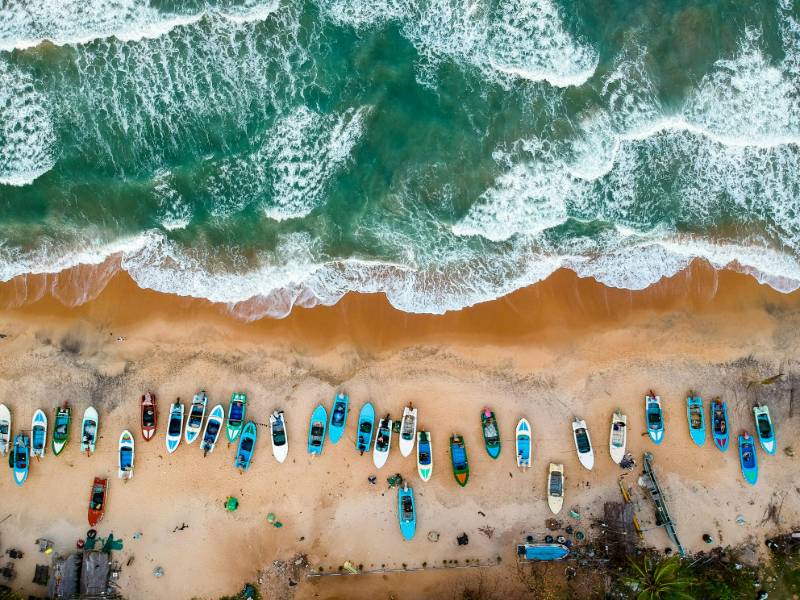
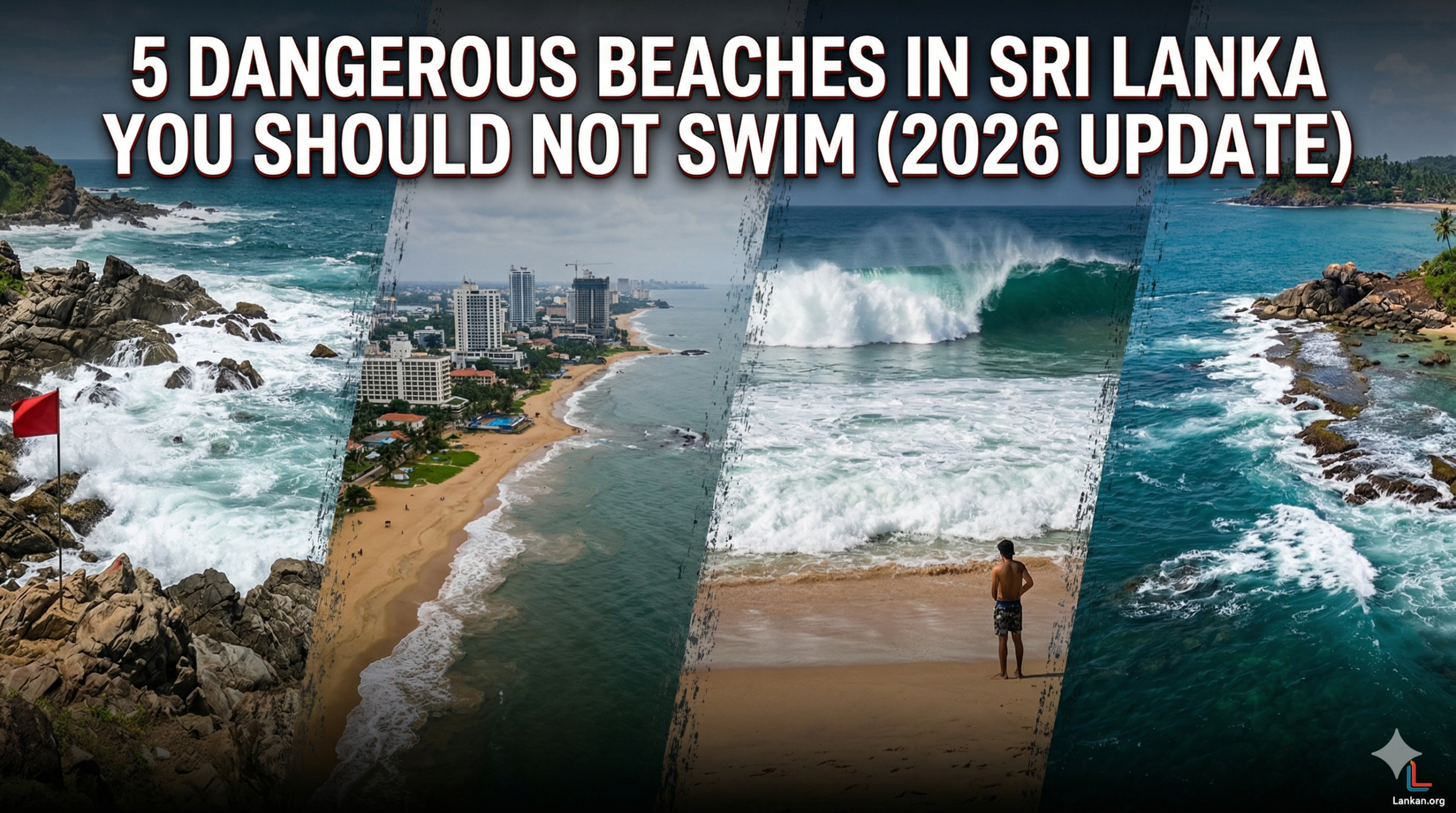
Sri Lanka’s coastline is breathtaking, but the Indian Ocean is unpredictable. Every year, tourists ignore the “Red Flags” and find themselves in life-threatening situations. If you are visiting in April or May 2026, here are the specific beaches where you should stay on the sand.
1. Kirinda Beach (The “Silent” Killer)
Located on the southeast coast, Kirinda is stunning but notoriously dangerous. The underwater rock formations create massive, unpredictable rip currents.
- Why to avoid: Even in “calm” weather, the surge can pull a grown adult off the shore in seconds.
- 2026 Status: Local authorities have increased patrols here, but the drowning rate remains the highest in the region for non-locals.
2. Mount Lavinia (High Pollution & Drop-offs)
While popular for its sunset views near Colombo, Mount Lavinia is not ideal for swimming in April 2026.
- The Hazard: Sudden “drop-offs” where the sand disappears beneath your feet, combined with strong undertows.
- Pollution Alert: According to recent 2026 water quality reports (CleanAir.lk), urban runoff after April pre-monsoon showers often spikes bacteria levels here.
3. Nilaveli & Uppuveli (The Seasonal Shift)
In April, the East Coast is just beginning to wake up. However, the sea isn’t always “settled” yet.
- The Hazard: During the transition, “cross-swells” make swimming exhausting and dangerous for children.
- Better Alternative: Wait until June/July for the crystal-clear, lake-like conditions Nilaveli is famous for.
4. Tangalle – Goyambokka & Silent Beach
These are the most beautiful beaches in Sri Lanka, but they are “Open Ocean” beaches.
- The Hazard: Unlike Unawatuna (which has a reef), Tangalle has no natural barrier. The waves break directly on the shore with incredible force (shore-break).
- Advice: Great for a tan and a photo for your Facebook page, but do not go chest-deep unless you are an expert swimmer.
5. Mirissa (The “Secret” Right Side)
Mirissa is great, but the far right side (near the harbor/rocks) is a different story.
- The Hazard: Strong currents pull toward the rocky reef. In April 2026, as the southwest monsoon winds start to pick up, these currents become stronger.
How to Stay Safe: The “Lankan.org” Checklist
- Look for the Flags: Red = No swimming. Yellow = Exercise caution. No Flag = Ask a local.
- The “Local Test”: If you don’t see local fishermen or kids in the water, stay out. They know the “unwritten rules” of the tide.
- Check the 2026 Forecast: Before heading out, check our travel.lankan.org weather hub for daily sea state updates.