
Solo Traveler Praises Sri Lanka Police for ‘Incredible’ Response After Viral Harassment Video
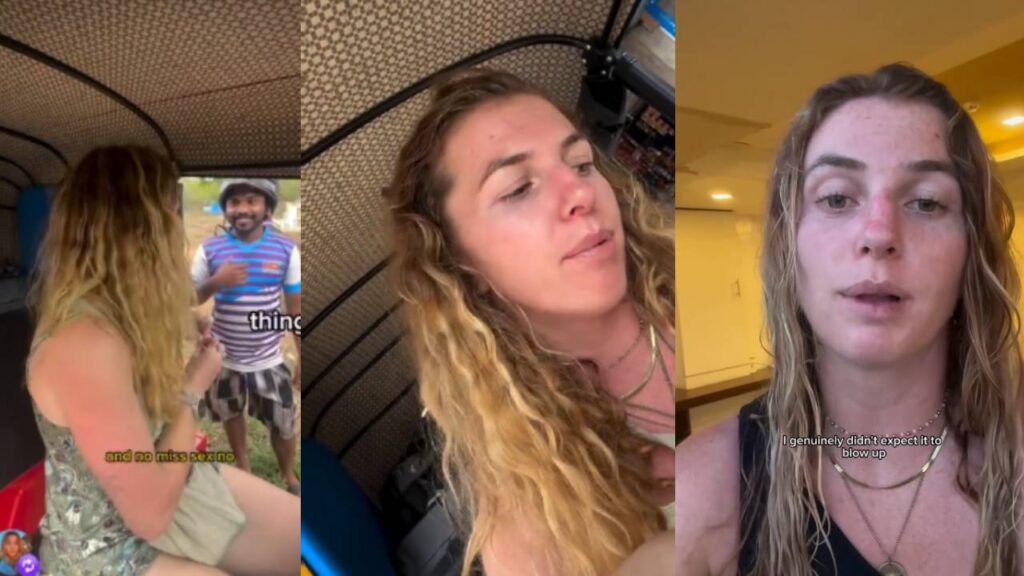
Colombo, Sri Lanka — A 24-year-old New Zealand solo female traveler whose video of a sexual harassment incident went viral, sparking a global debate on women’s safety abroad, has strongly defended Sri Lanka as a tourist destination, praising locals and the Sri Lankan Police Tourism Division for their swift, proactive action. The traveler, identified as Molly, was on a solo road trip in a tuk-tuk on the eastern coast when a man on a scooter allegedly propositioned her and then exposed himself after she refused. She filmed the encounter, and the video subsequently garnered millions of views across social media platforms, drawing international criticism and prompting concerns about tourist safety. Swift Law Enforcement Action Within days of the video circulating, the Sri Lankan Police, working with the Tourism Division and local authorities, launched an intensive manhunt. The suspect, a 25-year-old local, was identified, traced, and arrested on Saturday (November 16, 2025), despite attempts to change his appearance and residence to evade capture. “Thank you to everyone who sent support, and to the Sri Lankan Tourism Police for acting so quickly,” the traveler stated, describing the police response as “incredible.” The matter is now before court, with the suspect expected to face charges shortly. Incident Does Not Define the Country Despite the disturbing experience, the New Zealander emphasized that the isolated case should not define the entire destination or its people. “One incident does not define a country, and it doesn’t define solo female travel. Sri Lanka is an incredible place, and I felt safe for my entire month on the road,” she said, encouraging other women not to let the behavior of one individual shape their view of the whole culture. She recounted an overwhelmingly positive experience throughout her travels, highlighting the kindness, generosity, and assistance she received from locals. Fostering a Vital Conversation The traveler expressed hope that the incident, and the strong reaction to it, will fuel “real conversations about women’s safety, solo travel, and the reality we still face.” However, she also addressed frustrating online comments that shifted the focus to victim-blaming, stating that women should be able to travel anywhere without fear and should not have to justify it. She noted that sexual harassment is a “harsh reality for women” everywhere, not just while traveling. Sri Lankan Police officials have acknowledged that the incident “damaged the country’s reputation” and reaffirmed their commitment to safeguarding visitors and ensuring that perpetrators are brought to justice. The traveler concludes: “Let’s keep the conversation going, but let’s also remember: the world is full of good people.” Instagram
Sony International Sends Cease & Desist to Sri Lankan TV Channel Over Suspected IP Infringement

A legal dispute is unfolding after Sony International issued a Cease & Desist letter to a Sri Lankan TV channel, accusing the network of violating its Intellectual Property Rights through one of its programmes. The letter instructs the channel to immediately stop producing and broadcasting the programme identified as infringing Sony’s content. It further warns that failure to comply will result in legal action being filed without additional notice, including a claim for damages caused by the unauthorized use of Sony’s intellectual property. Sources within the Sri Lankan TV channel say the management has been thrown into confusion and urgency since receiving the notice, with concerns mounting over the large investment already made in the programme. The channel is now reviewing its legal position as both sides await the next steps in what could become a major industry dispute.
Three-Wheeler Driving Law Dispute in Sri Lanka
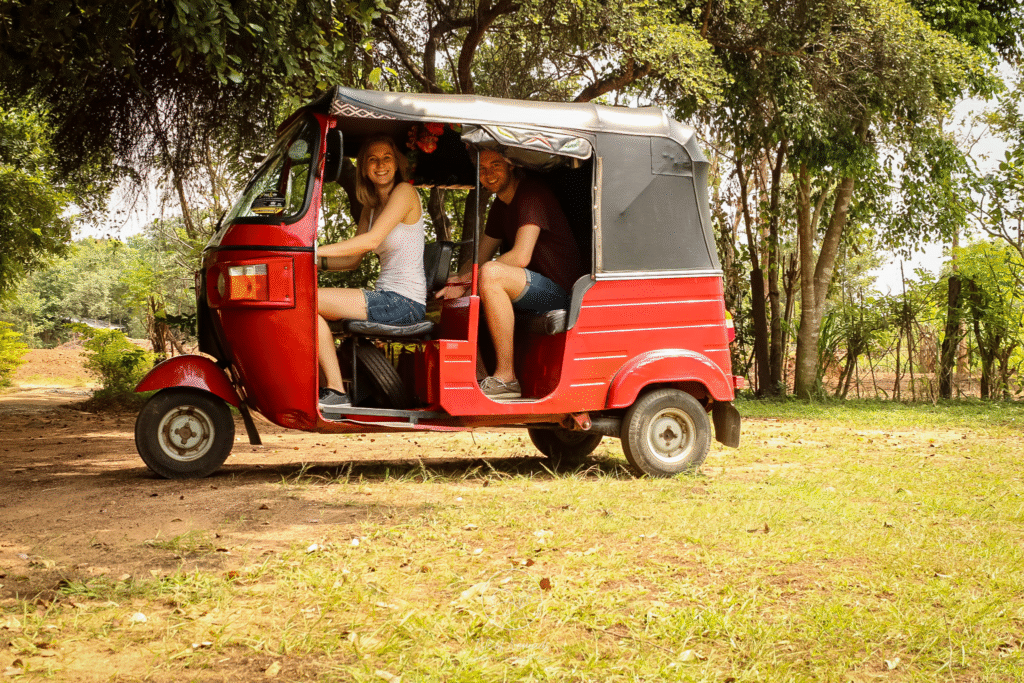
Three-wheel rental companies have rejected claims made by Police Media Spokesperson ASP F. U. Wootler, who stated at a media briefing that it is “totally illegal” for foreigners to drive trishaws (three-wheelers) in Sri Lanka. In a video statement issued last week, ASP Wootler said: “We have witnessed tourists using trishaws, which is totally illegal. We have also taken legal action against the owners of these trishaws.” ⚖️ The Industry’s Counter-Argument Industry representatives asserted that the Police statement was inaccurate and contradicted long-standing laws governing foreign visitors driving vehicles in the country. They provided the following legal basis for their rebuttal: 🛵 Legal Procedure for Tourists The companies emphasized that, under this established framework, foreign nationals are permitted to operate vehicles in Sri Lanka, including three-wheelers, provided they complete a specific verification process: This process, they noted, has functioned for decades and continues to be recognized by the Department of Motor Traffic and other law enforcement authorities. 💥 Impact on Business The companies further claimed that the Police statement had created unnecessary confusion among tourists and had negatively affected their businesses. They stressed that tourists regularly and lawfully use IDPs to rent and drive three-wheelers in Sri Lanka. Several attempts by Newswire to obtain clarification from police went unanswered. Is there any specific part of this information you would like me to focus on or summarize further?
Royals Confirm Sangakkara Comeback; Dravid Out, Samson Traded for Jadeja & Curran

Rajasthan Royals have reappointed Kumar Sangakkara as Head Coach for IPL 2026, marking his return to the dugout after a one-year stint as Director of Cricket while Rahul Dravid coached the team. The franchise also bolstered its support staff, elevating Vikram Rathour to Lead Assistant Coach, and welcoming back Trevor Penney (Assistant Coach) and Sid Lahiri (Performance Coach). Shane Bond remains the fast bowling coach. Most notably, the Royals sent shockwaves through the league by trading talismanic skipper Sanju Samson to Chennai Super Kings in exchange for star players Ravindra Jadeja and Sam Curran.
Unlock Your Higher Education Dream: Applications Open for Interest-Free Student Loans!

Are you someone aspiring to pursue a degree program? If so, this announcement contains crucial information that could significantly benefit your academic journey! The Ministry of Education, Higher Education, and Professional Education has officially called for applications under the Interest-Free Student Loan Scheme. This initiative is designed to expand higher education opportunities for eligible students. Key Opportunities Eligibility and Application Details Don’t miss this opportunity to secure an interest-free loan for your degree! https://docs.google.com/forms/d/e/1FAIpQLSfy6ftRqJhWZFtVRHdTCfE6pGr4LjOuncAbEl3m26UaOuRvkQ/viewform?pli=1
Charith’s Wild Cookbook: The Outdoor Cooking Sensation That Conquered YouTube
From Village Kitchen to Global Stage: The Charith Silva Phenomenon The world of culinary YouTube is vast, but few channels manage to blend authentic cooking, breathtaking outdoor settings, and compelling storytelling quite like Charith’s Wild Cookbook. Spearheaded by the talented Sri Lankan chef and content creator, Charith N. Silva, this channel has not only introduced traditional Sri Lankan food to billions of viewers globally but has also shattered records, securing its place as an undisputed digital champion. If you’re searching for unique recipes, stunning videography, and a creator who truly celebrates culinary heritage, here’s why Charith’s channel is a must-watch. Making YouTube History: Charith’s Milestones Charith’s journey proves that authenticity is the ultimate key to success. Launched during the pandemic, the Wild Cookbook YouTube channel quickly gained traction by showcasing Charith preparing diverse dishes, often over an open fire or in rustic, natural settings. His consistent high-quality videos have amassed over 4 billion views, turning a simple idea—outdoor cooking—into a global food content powerhouse. The Wild Cookbook Recipe for SEO Success What exactly draws millions to Charith’s channel? It’s a perfect blend of high-demand content and strategic execution, which is great for YouTube SEO: 1. Focus on Long-Tail Recipe Keywords While the channel features a fusion of global flavours, its strength lies in authentic Sri Lankan recipes like: These specific, long-tail keywords capture high-intent viewers who are looking for exactly this unique type of content. 2. High-Quality, Unique Visuals Charith’s signature element—the outdoor, often scenic, cooking location—is a strong differentiator. This visual distinctiveness helps his videos stand out in search results, increasing click-through rates (CTR) alongside his expertly crafted thumbnails. 3. Storytelling and Cultural Context Charith doesn’t just share ingredients; he shares the story behind the food. By narrating each dish’s cultural backstory, he taps into a global audience searching for: This adds depth and drastically boosts viewer watch time, a critical factor for YouTube’s search algorithm. Beyond the Screen: Charith’s Expanding Empire Charith’s influence now extends beyond the digital realm. Fans searching for the famous Sri Lankan chef can also visit his brick-and-mortar restaurant, Wildish, located in Colombo. This venture blends the traditional, earthy spirit of the Wild Cookbook with modern culinary innovation, allowing followers to taste the unique flavour combinations they’ve seen on screen. Whether you are looking for a complex, authentic Sri Lankan curry or just an inspiring easy weeknight dinner recipe, Charith’s content has something for every cooking enthusiast. Explore the world of authentic, wild cooking today by searching for Charith’s Wild Cookbook on YouTube!
Sheryl’s Note to Her Fans

The news about her that was seen and heard yesterday led the fans who love Sheryl to start searching for her. Perhaps that is why she decided to add a note like this to Facebook. Sheryl, who was hospitalized due to an illness, has now recovered. She must have decided to tell her fans about it before anyone else because of the love she received from them. In any case, the recovered Sheryl added a note like this…
Sri Lanka’s Evolving Farewell: Latest Developments in Funeral Rituals and End-of-Life Practices
Sri Lanka, an island nation rich in cultural and religious diversity, observes a myriad of funeral rituals deeply embedded in its societal fabric. While many traditions have stood the test of time, the landscape of end-of-life practices is not static. Recent developments, from novel infrastructure initiatives to significant policy shifts, underscore a dynamic environment where age-old customs intersect with modern considerations and evolving societal values. A Glimpse into the Immediate Past: New Initiatives and Daily Observances In a striking move reflecting a burgeoning emphasis on comprehensive end-of-life services, the Sri Lankan government recently unveiled plans for dedicated pet cremation facilities and a pet cemetery. During the presentation of the 2026 budget on November 7, 2025, President Anura Kumara Dissanayaka announced an allocation of 100 million rupees for this pilot project, to be launched by the Kesbawa and Piliyandala provincial councils. This initiative, while focused on companion animals, signifies a contemporary approach to grieving and acknowledging loss, hinting at an expanding definition of ‘farewell’ in the nation. Beyond new infrastructure, the pulse of traditional human funeral arrangements continues across the island daily. Recent obituaries from early November 2025 reveal the consistent adherence to established practices. For instance, announcements detail viewing periods at prominent funeral parlours, followed by specific times for cremation at facilities like the General Cemetery, Borella (New Crematorium) or burial at locations such as Kanatte Borella Cemetery (Anglican Section). These notices, published in local media, serve as a real-time testament to the ongoing observance of diverse religious and customary rites, from interments to cremations across the country. Landmark Policy Shifts: Upholding Religious Freedom in Death Perhaps one of the most profound recent developments impacting funeral rituals in Sri Lanka stems from policy amendments initiated in 2024. In July 2024, the Sri Lankan government formally issued an apology to the island’s Muslim minority for the controversial policy of mandatory cremations for COVID-19 victims. This deeply distressing policy, enforced since March 2020, disregarded Islamic religious tenets which strictly mandate burial, and caused immense suffering to affected families. Following sustained protests from Muslim groups and international pressure, the ban on burials for COVID-19 victims was initially lifted in February 2021. The July 2024 apology further solidified the government’s commitment to rectify past injustices, with a promise of new legislation to guarantee the right to burial or cremation according to an individual’s religious customs or final wishes. President Ranil Wickremesinghe, in April 2024, announced the establishment of a committee and future legislation aimed at coordinating arrangements for last rites in accordance with diverse religious customs, including those of the Muslim community. These developments signal a crucial step towards safeguarding religious freedom and ensuring that all communities can observe their sacred funeral rites without undue interference. Diverse Traditions Endure: The Tapestry of Sri Lankan Funeral Rites At its core, Sri Lanka’s funeral landscape is a vibrant tapestry woven from the threads of its major religions: Buddhism, Hinduism, Islam, and Christianity. Each faith approaches death with unique rituals, yet all share a common thread of reverence for the deceased and solace for the bereaved. For the majority Sinhalese Buddhist community, death is seen as an inevitable transition in the cycle of rebirth. Rituals often involve chanting ‘pirith’ by monks for the dying, keeping the body at home or a funeral parlour for a few days to allow relatives to pay respects, and typically cremation. However, a poignant custom dictates burial if the deceased’s parents are still living. Post-funeral, merit-transferring ceremonies, such as ‘dana’ (almsgiving) to monks, are performed on the seventh day, third month, and annually to ensure a favourable rebirth for the departed. Hindu funerals similarly often involve viewing the body before cremation, a practice that traditionally sees males attending the cremation grounds. Purification rituals and annual observances are also integral, aimed at the well-being of the deceased’s soul. For Sri Lanka’s Muslim community, burial is non-negotiable, with bodies interred as soon as possible, facing Mecca. Cremation is strictly forbidden in Islam, making the past compulsory cremation policy particularly traumatic. Community organizations play a vital role in coordinating these swift and dignified burials. Christian funerals, predominantly for Catholics and Anglicans, involve burials after a period of mourning and prayers, often including a funeral service at a church and burial in designated cemeteries. The viewing of the deceased’s body is also a common practice. The Enduring Significance of Communal Support Regardless of religious affiliation, a universal aspect of Sri Lankan funerals is the strong communal support system, often referred to as ‘mala gama’ (the gathering of the village). Neighbors and relatives rally around the grieving family, providing food and emotional sustenance. This collective mourning process, where stories and memories of the deceased are shared, is crucial for helping the bereaved accept their loss and navigate the painful journey of grief. Conclusion Sri Lanka’s funeral rituals are a living testament to its rich, multi-faceted heritage. While ancient traditions provide a profound framework for grieving and remembrance, recent developments, including the forward-thinking initiative for pet cemeteries and, more significantly, the government’s commitment to upholding religious freedom in death through apology and pending legislation, illustrate a nation striving to balance tradition with evolving societal norms and human rights. These ongoing conversations and adaptations ensure that the solemn process of farewell continues to be treated with the dignity, respect, and cultural sensitivity it deserves.
The Untimely Loss of a Young Life: 21-Year-Old Sabaragamuwa University Student Passes Away
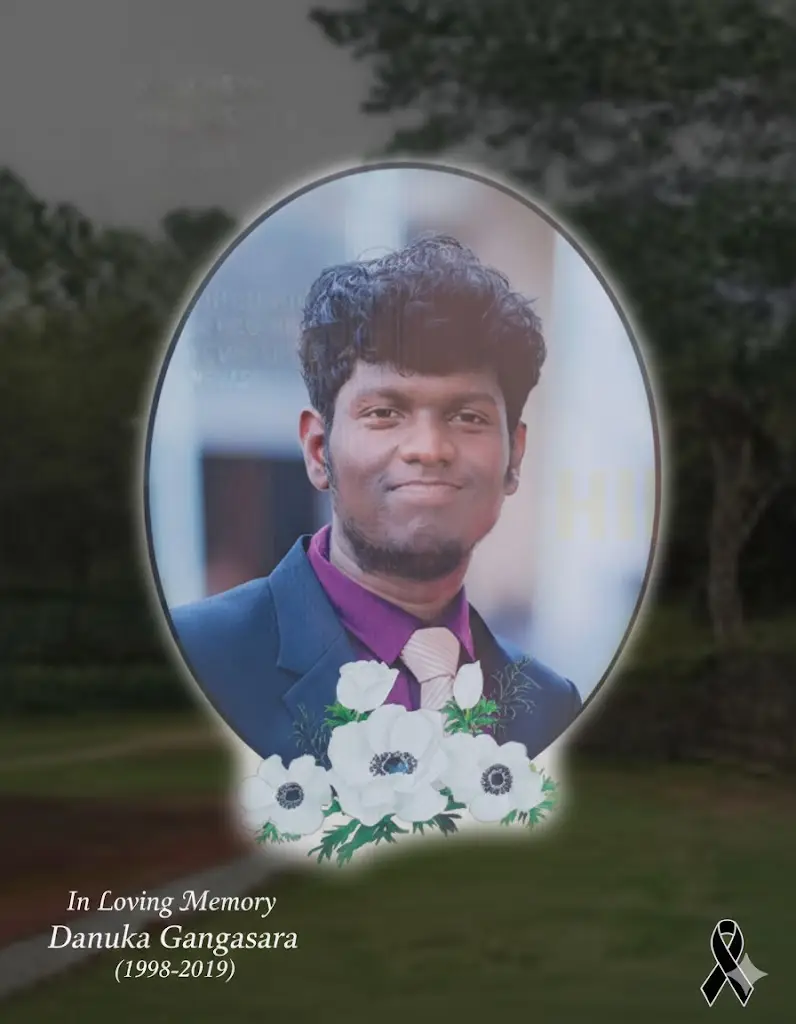
“I told my mother I was going to a friend’s birthday party, and that’s how my brother left. He called her a couple of times. Around 6:30 PM, his voice sounded strange when he called. He mentioned he had tonsillitis. About half an hour later, his friend called Mom and told her Danuka was having trouble, asking her to come to the hospital quickly. Alas, when we went, my brother had already left us. Now, the whole house is desolate without him,” Tharisha Dissanayake (25) said, weeping uncontrollably over the sudden, untimely demise of her only sibling. Danuka Gangasara Dissanayake was a 21-year-old university student. An unfortunate bout of phlegm in his throat led to his admission to the Horana District General Hospital on the 2nd, but doctors could not save his life. Danuka studied at Isipathana College, Colombo, since Grade 2. After passing the G.C.E. Ordinary Level exam with high marks, he chose the Mathematics stream for his Advanced Level studies. Equally talented in Mathematics and Physics, he passed his Advanced Level exam with distinction and entered the Faculty of Applied Sciences at <internal-link:Sabaragamuwa University> (Sabaragamuwa Vishwa Vidyalaya), filling his parents’ lives with immense hope. Tragically, all those hopes have now been shattered. Danuka associated with many friends and was a young man who constantly sang and enjoyed himself in their company. Everyone in the area loved him for his innocent nature. Even though he started his university education just a week ago, he had already gathered many friends, a testament to his popularity among his peers. Danuka had been staying at the university hostel for about a week. He came home on Friday night, the 31st, hoping to spend the two weekend holidays with his parents before returning to university. However, fate snatched him away, turning everything upside down. Tharisha, who completed her degree at the <internal-link:University of Sri Jayewardenepura> (Jayawardhanapura Vishwavidyalaya) a month ago, was Danuka’s only sister. His mother and father also work in the non-academic staff of the same university. Overcome with unbearable grief, his sister Tharisha shared her feelings: “He only had me, and I only had him, so we were very close. He told me everything. Similarly, he deeply loved his mother and father. He never did anything dishonest. My brother excelled in studies, drama, swimming, and sports. He also loved to play the guitar. The house was always lively when he was around. He often made very delicious kavum (traditional Sri Lankan oil cake), getting help from Mom. He always enjoyed singing with his friends. Since the university started late, he had gone on trips and gotten to know many friends. His friends are all very good people. My brother came home from the hostel on Friday night. He had a slight cold. We thought it might be due to the change in climate. He took medicine the next day, and it seemed to improve. There was a friend’s birthday party on the 2nd. He told Mom he would watch a movie and go to the party, and that’s how he left. He called Mom a few times. Around 6:30 PM, his voice sounded strange when he called. He said he had tonsillitis. About half an hour later, the friend called Mom, telling her Danuka was unwell and to come to the hospital quickly. Alas, the whole house is now desolate without our brother. When they suddenly said my brother, who was lively and strong, had passed away, I did not believe it was true at all. So, I didn’t tell anyone about it until the morning. But the next day, I found out it was true. At that moment, I could not think straight or do anything.” Danuka went to his best friend’s house in Gonapala to attend the birthday party. His friend was a first-year Engineering student at the <internal-link:University of Moratuwa> (Moratuwa Vishwavidyalaya). The adults knew these children well, as they had been visiting each other’s homes for a long time. At Danuka’s request, his friend prepared a home remedy—a paste of ginger, lime juice, and garlic—for his phlegm condition. Afterward, the phlegm came out, but Danuka found it difficult to speak. His friend had gone to take a photo with his mother and father when a few people in the house came and told them Danuka was unwell. They quickly took him to a private hospital in Horana, where they were advised to take him to a larger hospital. As his friend helped him into the car to go to the hospital, Danuka told his friend he was struggling to breathe. No one knew those were his last words. The post-mortem examination of this young man was performed by Specialist Judicial Medical Officer Sandakan Waduge at the Horana District General Hospital. Horana Inquirer into Sudden Deaths, Sumedha Gunawardena, declared an open verdict. It is heartbreaking that a valuable young man for the future society was lost when Danuka Gangasara was laid to rest, amidst a vast crowd who came to pay their last respects, drenching the entire area of Walmilla Junction, Kindelpitiya, Mahawatta in tears.
Sri Lanka Chokes: Unhealthy Air Quality Persists, Driven by Regional Pollution
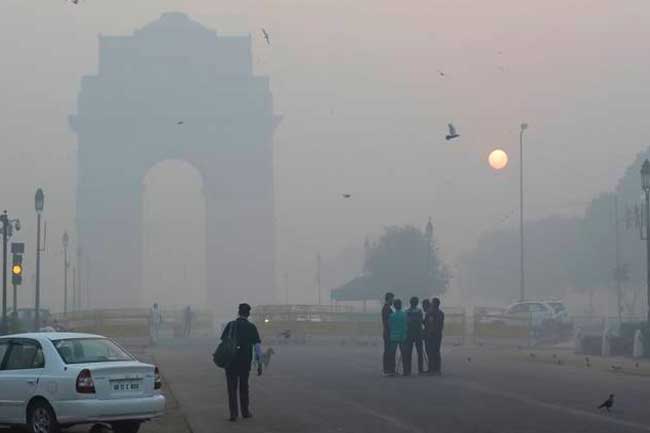
Sri Lanka Chokes: Unhealthy Air Quality Persists, Driven by Regional Pollution COLOMBO, Sri Lanka – November 11, 2025 – Sri Lanka is once again battling significantly deteriorated air quality, with numerous regions across the island reporting “unhealthy” to “poor” Air Quality Index (AQI) levels. This concerning trend, largely attributed to a combination of local emissions and a persistent influx of transboundary pollution from neighboring India, poses substantial health risks and is anticipated to continue into early next year. Latest reports from environmental authorities confirm a widespread impact, necessitating public advisories for vulnerable populations. Current Snapshot: Unhealthy Readings Across the Island As of November 11, 2025, real-time data paints a grim picture of Sri Lanka’s atmospheric health. The national average AQI has fluctuated, registering around 116 (classified as ‘Poor’) at one point, with some areas dipping into more critical categories. Cities like Colombo, Kandy, and Jaffna, typically urban centers with higher population densities, are particularly affected. Colombo’s AQI has been recorded between 97 (‘Moderate’) and 117 (‘Poor’) within the last 24-48 hours, while Kandy has consistently shown ‘Unhealthy’ levels, reaching as high as 156. Beyond the major cities, the geographical spread of poor air quality is alarming. Reports indicate that regions including Kaduruwela, Chilaw, Akaragama, Digana, Hungama, Akkaraipattu, Kalawana, Mulliyawalai, Pannankandy, Adampan, Uppuveli, Puttalam, Badulla, Polonnaruwa, Anuradhapura, Kilinochchi, and Mannar have all experienced a significant drop in air quality. The Central and Western Provinces have recorded AQI values of 156 (‘Unhealthy’) and 119 (‘Poor’), respectively, highlighting the extensive nature of the crisis. The Dual Threat: Local Emissions and Transboundary Smog Experts from the National Building Research Organisation (NBRO) and the Central Environmental Authority (CEA) confirm that the worsening air quality stems from a confluence of factors. While local vehicular emissions and industrial activity contribute to the baseline pollution, a significant driver of the current spike is transboundary pollution. Specifically, atmospheric circulation patterns have transported pollutants from the heavily industrialized and often smog-laden Indo-Gangetic Plains of Northern India. This regional phenomenon has seen AQI levels in parts of India exceed 300, creating a vast plume of pollution that wind patterns, modulated by recent cyclonic storms in the Arabian Sea and Bay of Bengal, have carried across to Sri Lanka. This mirroring of India’s severe air pollution crisis, where cities like New Delhi have seen AQI values reaching a ‘severe’ 344, underscores the interconnected nature of air quality in the region. Key Pollutants and Health Implications The primary culprits in this deteriorating air are fine particulate matter, specifically PM2.5 and PM10. PM2.5 levels across Sri Lanka have been reported around 42 µg/m³ overall, and between 34-42 µg/m³ in Colombo. These levels are notably above the recommended World Health Organization (WHO) guidelines, signifying a considerable health threat. These microscopic particles, when inhaled, can penetrate deep into the lungs and even enter the bloodstream, leading to a range of serious health issues. Medical professionals and environmental agencies are issuing stern warnings, particularly for sensitive groups. Children, the elderly, pregnant women, and individuals with pre-existing respiratory conditions (such as asthma) or heart ailments are at heightened risk. Symptoms such as breathing difficulties, throat irritation, and aggravated asthma are common under current conditions. Advisories and Outlook In response to the escalating crisis, authorities are advising the public to take precautionary measures. Citizens are strongly encouraged to reduce prolonged or heavy outdoor exertion and, where possible, limit time spent outside. Keeping windows and doors closed to minimize indoor exposure to pollutants is recommended, and wearing protective masks when venturing outdoors is also advised. The current air quality situation is not expected to be a short-term phenomenon. Officials from the NBRO project that these unhealthy conditions could persist until March 2026, implying a prolonged period of elevated health risks. This outlook necessitates sustained vigilance and proactive measures from both government bodies and the public. As Sri Lanka continues to monitor and grapple with this environmental challenge, the emphasis remains on protecting public health and exploring long-term strategies to mitigate both local and transboundary sources of air pollution. The situation serves as a stark reminder of the urgent need for regional cooperation on environmental issues that transcend national borders.