
Pioneering Women-Led Hotel Opens in Sri Lanka
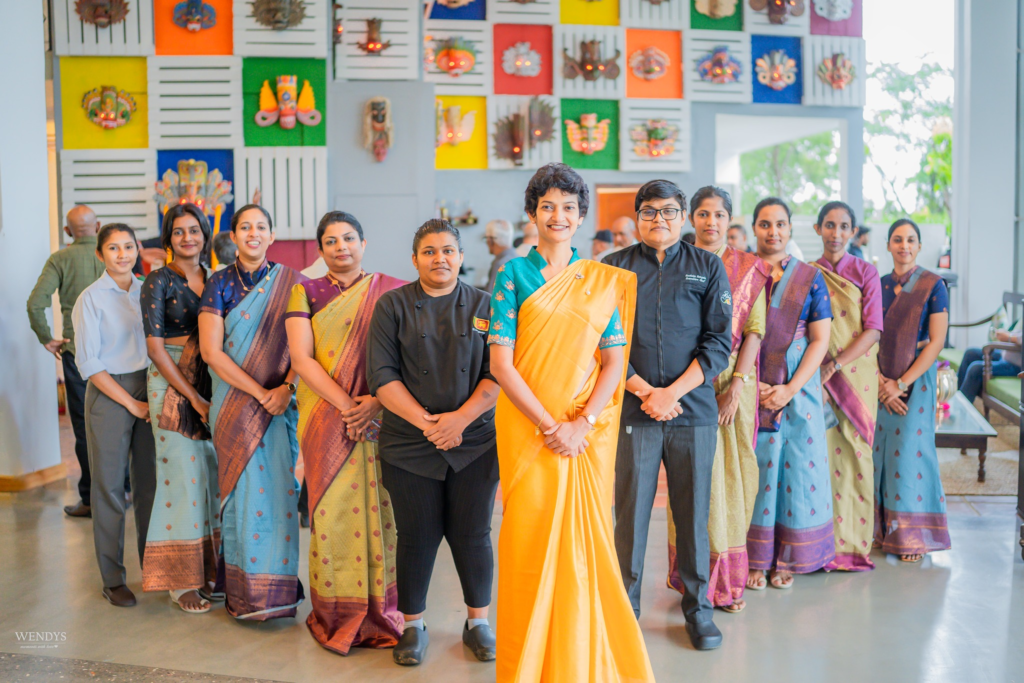
In a historic first for South Asia’s hospitality sector, Sri Lanka celebrated the inauguration of “Amba Yaalu,” the region’s first entirely female-operated tourist hotel, on January 10th. The innovative property marks a significant milestone in the nation’s commitment to women’s empowerment in the tourism industry. Nestled within a picturesque mango plantation featuring 457 TJC mango trees, the resort offers breathtaking views of the Kandalama Reservoir. The concept draws inspiration from the beloved novel ‘Amba Yaluwo’ (Mango Friends) and pays homage to Sri Lanka’s golden age of cinema, creating a unique cultural experience for guests. Developed by “Thema Collection,” the hotel’s opening ceremony drew distinguished guests including diplomatic representatives, government officials, and leading figures from the tourism sector. In a particularly meaningful gesture that bridged tradition with progress, two female Buddhist monks blessed the establishment and its all-women staff through a traditional Pirith ceremony, underlining the deep cultural significance of this pioneering venture. The hotel’s distinctive design pays creative homage to its literary namesake, the iconic Sinhala novel ‘Amba Yaaluwo’ by B. Ilangaratne, while celebrating Sri Lanka’s rich cinematic heritage. A fully restored vintage movie theater serves as a centerpiece of the property, complete with carefully curated displays of classic film posters, promotional banners, and antique camera equipment. The restaurant embraces this theatrical theme, designed to evoke the ambiance of a retro cinema hall, offering guests an immersive journey into Sri Lanka’s cultural past while enjoying contemporary hospitality excellence.
Richmond Castle: A Historic Architectural Marvel in Kalutara, Sri Lanka

Richmond Castle, located in Kalutara, Sri Lanka, stands as one of the most remarkable architectural treasures in the country. Built in 1896, this magnificent mansion was the brainchild of Mudaliyar Don Arthur de Silva Wijesinghe Siriwardena, a wealthy landowner and philanthropist who later came to be known as Padikara Mudali Mudaliyar Siriwardena. The castle’s design was inspired by an Indian Maharaja’s palace and was executed by renowned architects under the supervision of Holman, a British architect who brought European architectural elements to this South Asian masterpiece. Architectural Splendor and Historical Significance The two-story mansion spans over 42 acres of lush gardens and showcases an impressive blend of British, Dutch, and Indian architectural styles. The building features 99 doors and windows, intricate teak carvings, and imported materials from various parts of the world, including glass from Scotland, tiles from Italy, and ironwork from England. The craftsmanship of Richmond Castle reflects the opulence of colonial-era Sri Lanka and the vision of its original owner. The Mysterious Tales of Richmond Castle Over the years, Richmond Castle has gained notoriety for reported paranormal activities, leading to numerous ghost stories and supernatural encounters. Visitors and local residents have shared tales of unexplained phenomena within the castle grounds, adding an element of mystery to its historical significance. These stories of the Richmond Castle ghost have become deeply embedded in local folklore, attracting paranormal enthusiasts and curious visitors from around the world. Present Day Significance Today, Richmond Castle serves as both a historical monument and a tourist attraction in Kalutara, Sri Lanka. The site is maintained by the Public Trustee Department and is open to visitors who wish to explore its grand halls, beautiful gardens, and learn about its fascinating history. Despite stories of horror and supernatural occurrences, Richmond Castle remains an important cultural landmark that showcases the architectural and historical heritage of Sri Lanka. Visiting Richmond Castle Located approximately 40 kilometers south of Colombo, Richmond Castle is easily accessible from the Kalutara town. The castle offers guided tours that provide detailed information about its architecture, history, and the various stories associated with the property. Visitors can explore the mansion’s impressive interior, walk through its sprawling gardens, and learn about the life of Mudaliyar Siriwardena and the castle’s subsequent history. Whether you’re interested in colonial architecture, paranormal activities, or Sri Lankan history, Richmond Castle in Kalutara offers a unique blend of historical significance and mysterious allure that makes it a must-visit destination in Sri Lanka.
President Anura Kumara Dissanayake assured justice will be served to the victims of the Easter attack.
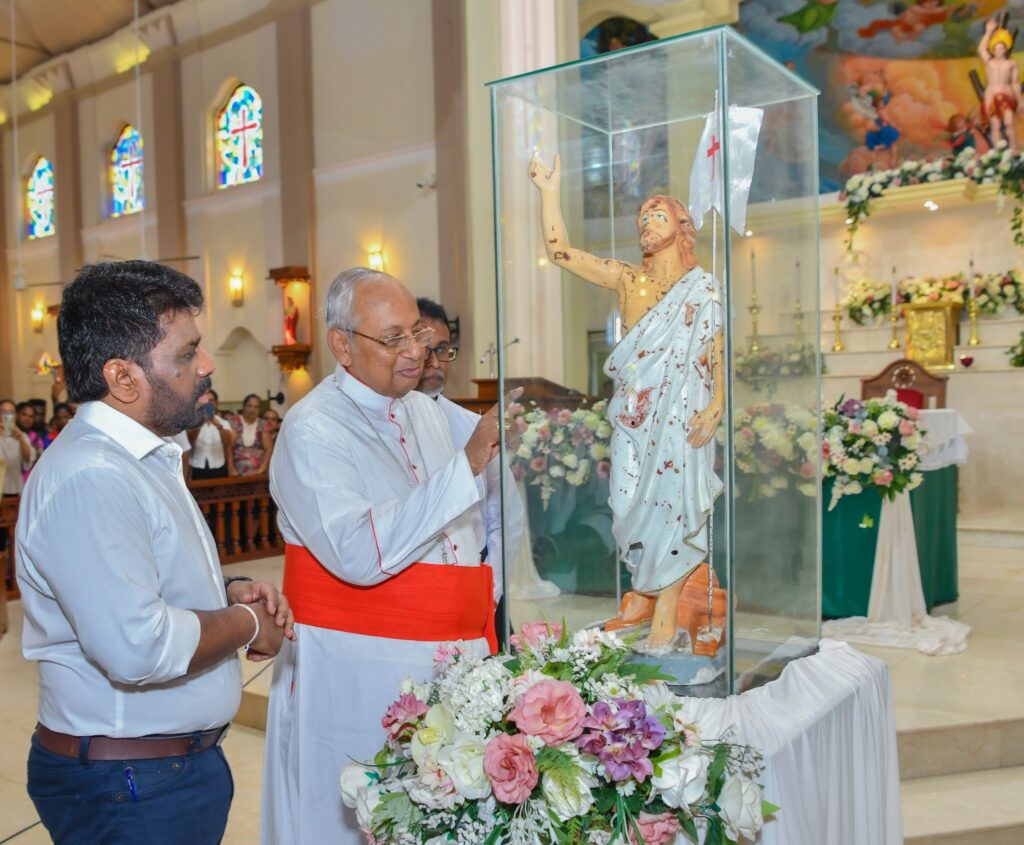
President Anura Kumara Dissanayake yesterday (06) assured that justice will be served to the victims of the Easter attack. He made this statement when meeting with the victims of the Easter attack. A discussion was held this morning at St. Sebastian’s Church in Katuwapitiya, Negombo, with family members of those injured and killed in the Easter Sunday bomb attack, led by His Eminence Malcolm Cardinal Ranjith and President Anura Kumara Dissanayake. Expressing his views, His Eminence Malcolm Cardinal Ranjith, the Archbishop of Colombo, said: “Since that day, we have tried our best to find out who did this through a transparent investigation. Because conclusions were drawn by the Presidential Commission, the Vijitha Malalgoda Committee, and the Parliamentary Select Committee. But all of them had accusations of neglecting responsibility. However, who did this, who provided the explosives, who organized it, who encouraged these people, who encouraged them to detonate it – they didn’t find anything about that… What we learned was… like an iceberg, we only see the top part, but there’s a big part underneath, that was concealed from us. For years, we made requests from various leaders, and finally, we even had to go to Geneva, to the Human Rights Committee. But we didn’t get any solution. We were helpless… The question that breaks their hearts is why did they do this to us? What did we do against them to do such a thing? That’s why we need an answer to that question, which is why we placed our trust in you this time.” President Anura Kumara Dissanayake also expressed his views: “More than five years have passed now. We will not allow such a tragedy to be buried in the sands of time and erased. I recently instructed the Secretary of Defense for Public Security that we should not conduct this investigation sitting on a pre-conclusion, collecting certificates to confirm that conclusion. I instructed to conduct a very clear investigation with a very open mind about what happened? Is there a hidden agenda behind this? There are several reasons. The first is that there is suspicion in society whether such an attack happened for a change in our country’s politics, which is being discussed in society. If hundreds of people in our country can be killed for a political goal, it’s a tragedy. So first of all, if our country’s politics is at such a destructive extreme, it should be revealed to society. Secondly, there is another discussion in society that if there is an attack or conspiracy against our country, there is suspicion that the state mechanism to prevent it is involved in these attacks. If the mechanism for the protection of the people of a country is working to break that protection, our country is always insecure. It’s insecure even now. If groups that should be prevented become partners in the attack, it’s an extremely dangerous situation. So, whether you look at it from that side or this side, we must necessarily reveal what happened. Thirdly, about 274 people died and a large number were injured. Justice must be done to the devotion within the victims regarding their relatives, their children, their spouses. Looking at it from that side too, we need to conduct this investigation fairly. On the other hand, I think the Easter Sunday attack polarized a significant portion of our society. A society was created that looks at each other with suspicion, distrust, hatred, and anger. Looking at it from that side too, justice must be done for this… I give you that assurance. Your expectation and my expectation are the same. First of all, we have built a governance. For the goals of the citizens of this country and my goals to be one. Therefore, the question of justice you expect will necessarily be resolved, and fulfilling justice is my expectation and hope too. We have already started it, we have already taken steps to launch these investigations very soon. If you have trust in us, we will ensure fairness and justice for you in this issue. An investigation, an experience is necessary in our country to prevent such a tragedy from happening again in our country. I assure you of that.”
The new Cabinet including the Prime Minister to be sworn in today…
The swearing-in of the new Cabinet including the Prime Minister is scheduled to take place today (24).Dr. Nihal Abeysinghe, Secretary General of the National People’s Power party, stated that MP Lakshman Nipunaarachchi, who was announced through a gazette, is also set to be sworn in as a new Cabinet Minister today.Accordingly, the new Cabinet will consist of 4 Ministers.Meanwhile, Dr. Nihal Abeysinghe, Secretary General of the National People’s Power party, said that new Ministry Secretaries will also be appointed today.
Winning Trust of All Citizens is My Duty – AKD
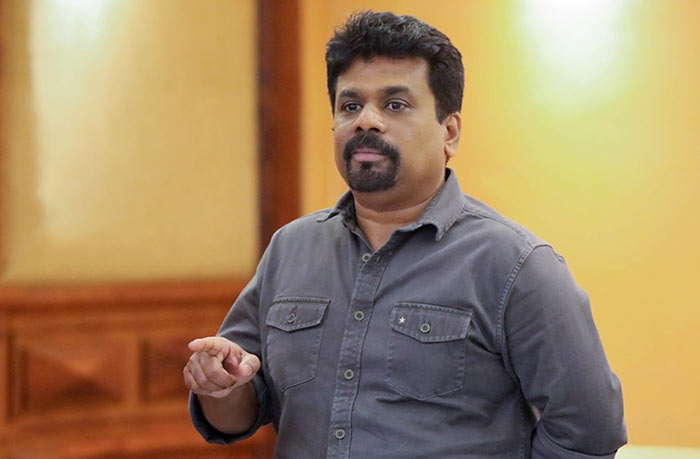
In his inaugural address as the 9th Executive President of Sri Lanka, Anura Kumara Dissanayake pledged to win the trust of those who did not vote for him, emphasizing his commitment to upholding democracy and fostering a positive political culture. “The cornerstone of democracy in Sri Lanka is the people’s mandate to elect a President. However, democracy does not end with the casting of votes and the election of a president. To truly strengthen democracy in our country, we must enhance our mechanisms and laws,” Dissanayake stated. He assured the people of Sri Lanka that he is fully committed to upholding democratic values throughout his tenure. Dissanayake highlighted the historical precedent of peaceful power transitions in Sri Lanka, expressing gratitude to former President Ranil Wickremesinghe for respecting the will of the people and setting a commendable example during the transfer of power. Acknowledging the challenges ahead, Dissanayake noted the widespread negative perception of politicians and politics in Sri Lanka. He committed to taking all necessary steps to restore the respect and trust of the people in their leaders and political system. “The deep-rooted crisis we face cannot be overcome by a single government, party, or individual alone. As I have mentioned before, I am not a magician; I am a common man born in this country. There are things I can do and things I cannot. There are things I know and things I do not. My primary task is to absorb talents, collate knowledge, and make better governance decisions,” he said, emphasizing the need for collective effort. Dissanayake called for the collective responsibility of all citizens to end the crisis, expecting support from everyone in fulfilling these responsibilities. He pledged to demonstrate his commitment through his actions and conduct, ensuring proper execution of his tasks to overcome the challenges. He also stressed the importance of international support, stating, “Regardless of geopolitical divisions, we aim to maintain beneficial relations with other countries. We are not a country that should be isolated; we should move forward with the world. We will never hesitate to take the necessary actions.” Dissanayake highlighted the crucial role of industries and businesses in nation-building efforts, expressing confidence in their support for the government. Dissanayake acknowledged the diverse nature of his victory and committed to winning the trust and support of those who did not vote for him. “I strongly believe I can fulfill this duty. In the future, you will witness and experience this, and I expect the people’s support,” he affirmed.
Diliths Disaster
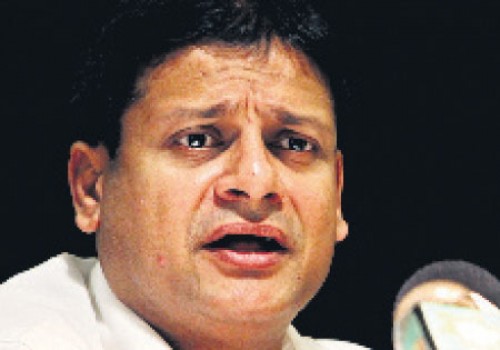
Known by many monikers- “Entrepreneur”, “wheeler-dealer” but mostly for the racist rhetoric using his TV channel, Owner of Derana TV, Dilith Jayaweera decided in all his wisdom to contest in the just concluded Presidential Election. Firstly, it was a bold move. And one welcomed by many. A break away from the tradition. It was, essentially, a good thing. But the problem was, it was a bad idea for Dilith. Right from the outset of his campaign, it was clear that his campaign was founded, based on and built upon a profoundly racist agenda (he called it nationalism ). He aligned himself with Udaya Gammanpilla, Wimal Weerawansa etc., politicians who have torn apart communities for decades. The results of the Presidential election saw the wheels come off his dreams, securing less than 1% of the vote. Despite having an entire TV channel and a massive million dollar media ad campaign, he was soundly rejected even in the Southern Heartland he campaigned hard in. Jayaweeras failure is a clear sign that Sri Lanka has matured and moved on away from racist, divisive politics. A united nation, Sri Lanka is looking to a brighter future and turning its back on the shenanigans of the past. Especially the youth. Jayaweera should take a leaf from Anura Kumara playbook; he changed, and won. If Jayaweera can shed his past and turn to a progressive politics, his talent as an entrepreneur and creativity will surely serve him well in politics. If he doesn’t, he is destined to the garbage can of political jokers like Seelaratne Thera, who provide nothing more but a humourou sideshow in Sri Lankan politics and elections. 23-09-2024
The transportation of ballot boxes and officials to presidential election polling centers begins this morning
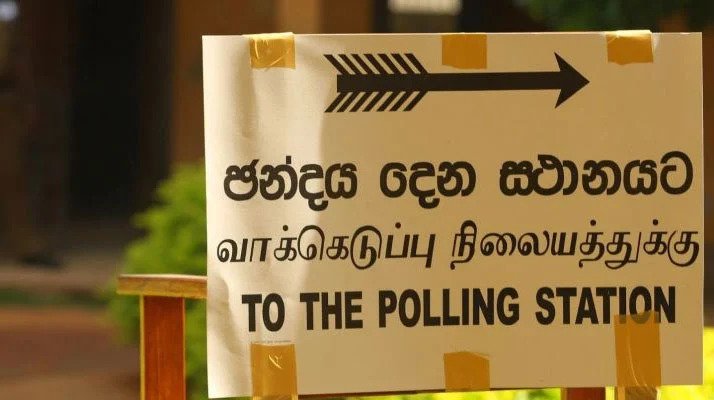
The transportation of ballot boxes and officials to presidential election polling centers begins this morning. The transportation of ballot boxes and officials to polling centers for the 2024 presidential election will commence this morning (20). Election Commissioner General Saman Sri Ratnayake stated that ballot boxes and staff will be dispatched to 13,421 centers accordingly. The number of distribution centers established for this purpose is 1234. He also stated that over 150,000 government officials have been deployed for polling center duties. The Election Commissioner General said that about a thousand officials, including chief counting officers, have been sent to outstation areas from several districts including Colombo. Meanwhile, the police say that special security will be provided for the transportation of ballot boxes and officials. Police Media Spokesman, Deputy Inspector General of Police Attorney Nihal Thalduwa mentioned that a special traffic plan is in effect around the centers where ballot boxes are being issued. Voting for the 2024 presidential election will take place tomorrow from 7 am to 4 pm. The number of eligible voters for this is 17,140,354. 38 candidates are contesting in this presidential election.
116 representatives from international election observation
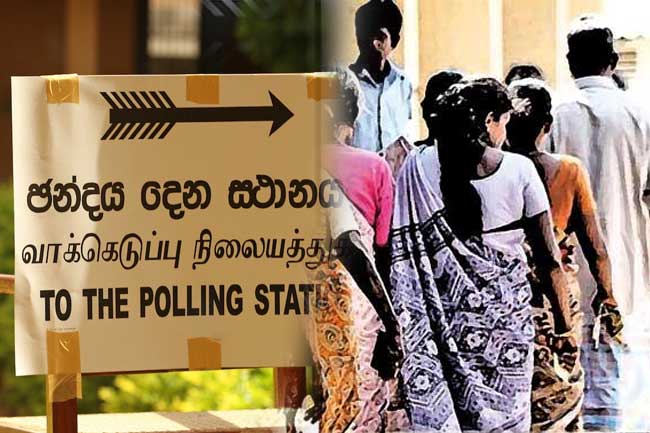
116 representatives from international election observation organizations have arrived in the country to observe the presidential election. The National Election Commission stated that 78 of them are European Union election observers. 22 Commonwealth observers have also arrived in the country. The number of observers who have arrived representing the Asian Election Observation Network is 9. Meanwhile, the National Election Commission stated that 7 representatives from South Asian regional countries have also arrived for the election observation process at the invitation of the Election Commission. The Commission said that they have departed for 25 districts for election observation activities. The Election Commission also mentioned that all police stations have been informed regarding the security of these officials.
10 Facts You Should Know About Sri Lanka
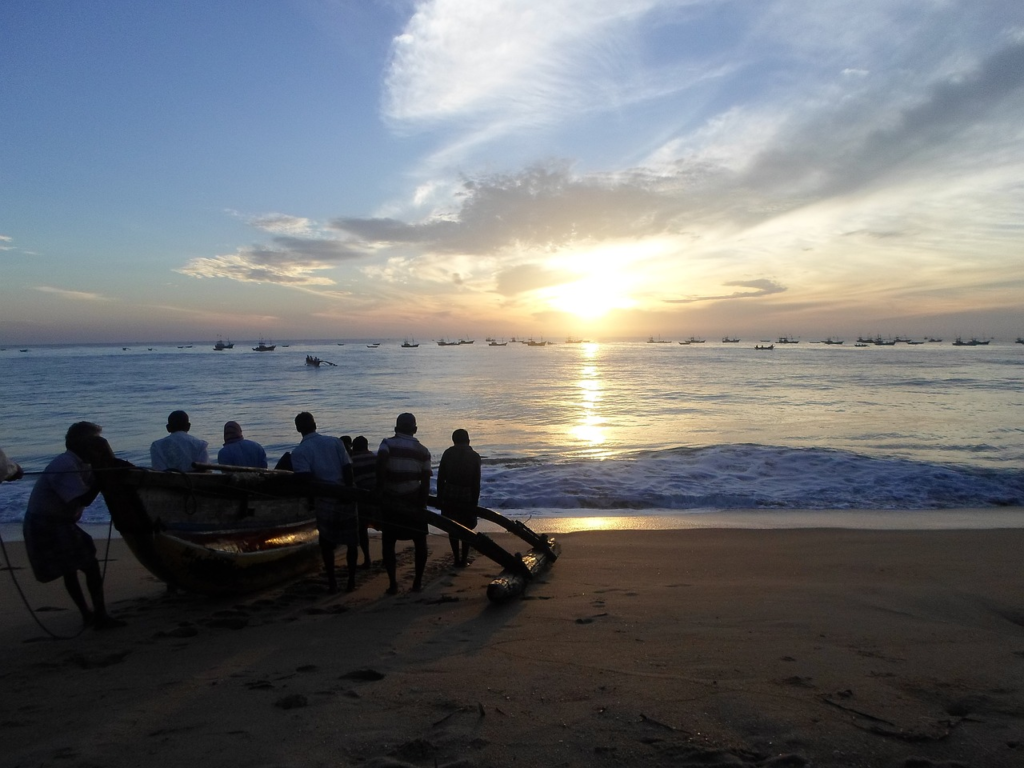
Sri Lanka, often called the “Pearl of the Indian Ocean,” is a beautiful island nation that offers a rich blend of culture, history, and natural beauty. Here are 10 fascinating facts about Sri Lanka that you should know about this tropical paradise: 1. A Land of Ancient History Sri Lanka boasts a history that dates back over 2,500 years. It has been home to some of the earliest advanced civilizations in Asia, including the ancient kingdoms of Anuradhapura and Polonnaruwa. These cities are now UNESCO World Heritage Sites, with ancient temples, stupas, and irrigation systems that reflect the country’s long-standing cultural legacy. 2. World’s Oldest Human-Planted Tree The Sri Maha Bodhi in Anuradhapura is the oldest human-planted tree with a recorded history. It was planted in 288 BC and is a sapling from the sacred Bodhi tree in India, under which Siddhartha Gautama attained enlightenment to become the Buddha. It is a place of pilgrimage for Buddhists around the world. 3. Biodiversity Hotspot Despite its small size, Sri Lanka is recognized as one of the world’s biodiversity hotspots. The island is home to 26 national parks, including Yala and Udawalawe, which are famous for their wildlife. You can spot leopards, elephants, sloth bears, and a wide variety of birds. Sri Lanka also has rich marine life, including blue whales, dolphins, and coral reefs. 4. Ceylon Tea Sri Lanka is one of the largest tea producers in the world, with its famous “Ceylon Tea” being internationally recognized for its quality and flavor. The hill country, particularly around Nuwara Eliya, Kandy, and Ella, is dotted with lush tea plantations that offer picturesque views and cool climates. 5. A Multicultural Nation Sri Lanka is a melting pot of cultures, ethnicities, and religions. The main ethnic groups are the Sinhalese, Tamils, and Muslims, and the dominant religions include Buddhism, Hinduism, Islam, and Christianity. This diversity is reflected in the country’s festivals, languages, and cuisine, making it a vibrant and colorful destination. 6. Home to Sigiriya – The Lion Rock Sigiriya, a massive rock fortress, is one of the most iconic landmarks in Sri Lanka. Built in the 5th century by King Kashyapa, it features a palace, beautiful frescoes, and an ancient irrigation system. Sigiriya is also a UNESCO World Heritage Site and is often referred to as the “Eighth Wonder of the World.” 7. Spices and Ayurveda Sri Lanka has been known for its spice trade for centuries. Cinnamon, in particular, originated in Sri Lanka and was highly sought after by traders from all over the world. The island also has a long tradition of Ayurvedic medicine, an ancient healing practice that is still widely used today for its holistic approach to health and wellness. 8. Cricket Fever Cricket is more than just a sport in Sri Lanka; it’s a national obsession. The country’s cricket team has made a name for itself on the international stage, winning the ICC Cricket World Cup in 1996. The sport unites people from different backgrounds, and matches are celebrated with great enthusiasm. 9. Tropical Climate Sri Lanka enjoys a tropical climate with two monsoon seasons. The southwest monsoon affects the southern and western regions from May to September, while the northeast monsoon brings rain to the northern and eastern regions from December to February. Despite the rains, the island enjoys warm weather year-round, making it an ideal destination for beach lovers. 10. Famed for Stunning Beaches Sri Lanka’s coastline is renowned for its pristine beaches, from the golden sands of Bentota and Hikkaduwa to the surf-friendly shores of Arugam Bay. Whether you’re looking to relax by the water, explore coral reefs, or enjoy water sports, the island offers a beach experience for every traveler. Sri Lanka is a country that blends ancient heritage with natural beauty and a vibrant culture. Whether you’re drawn to its wildlife, historical sites, or tranquil beaches, there’s something for every traveler to discover in this tropical paradise.
Presidential Candidate list 2024
As the presidential election draws near, 40 candidates have officially submitted their deposits to the Election Commission, signaling their intent to run for the nation’s highest office. This diverse group of candidates comprises both independent contenders and representatives from a range of political parties. Here are the candidates who have submitted their deposits: 1. President Ranil Wickremesinghe – Running as an Independent. 2. Sarath Keerthiratne – Independent candidate 3. Oshala Herath – Representing the Abhinava Nivahal Peramuna 4. ASP Liyanage – From the Sri Lanka Labour Party. 5. Sajith Premadasa – Leader of the Samagi Jana Balavegaya. 6. PWSK Bandaranaike – Candidate for the National Development Front. 7. Dr. Wijeyadasa Rajapakshe – Representing the National Democratic Front. 8. KK Piyadasa – Independent candidate. 9. Siritunga Jayasuriya – United Socialist Party candidate. 10. Ajantha De Zoysa – From the Ruhunu Janatha Peramuna. 11. K. Ananda Kularatne – Independent candidate. 12. Sarath Manamendra – Nava Sihala Urumaya 13. Venerable Battaramulle Seelarathana Thero – Janasetha Peramuna 14. Venerable Akmeemana Dayarathana Thero – Independent candidate. 15. Siripala Amarasinghe – Independent candidate. 16. K. R. Krishan – Arunalu Janatha Peramuna 17. Sarath Fonseka – Independent candidate. 18. Anura Kumara Dissanayake – National People’s Power 19. P. Wijesiriwardena – Socialist Equality Party 20. Antony Victor Perera – Independent Candidate 21. A. Mohammed Ilyas – Independent Candidate 22. M. M. Pemasiri – Independent Candidate 23. Anura Sydney Jayaratne – Independent Candidate 24. D. M. Bandaranaike – Independent Candidate 25. Priyantha Pushpakumara Wickremesinghe – New Sama Samaja Party 26. M. Thilakarajah – Independent Candidate 27. J. D. K. Wickremeratne – Ape Jana Bala Party 28. Roshan Ranasinghe – Independent Candidate 29. Mahinda Devage – Sri Lanka Socialist Party 30. Prasanga Suranjiva Anoj De Silva – Democratic United National front 31. P. Ariyanethran – Independent Candidate 32. Mohammed Infaz – United Democratic Alliance 33. Dilith Jayaweera – Sri Lanka Communist Party 34. Nuwan Bopage – Socialist Peoples Forum 35. Namal Rajapaksha – Samabima Party 36. Chaminda Anurudhdha – Independent Candidate 37. Namal Rajapaksa – Sri Lanka Podujana Peramuna 38. Janaka Ratnayake – Eksath Lanka Podujana Party 39. Lalith De Silva – United National freedom Front 40. Sarath Kumara Gunaratne – Independent Candidate