
The Ramayan Trail Project:Unveiling Sri Lanka’s Spiritual Odyssey
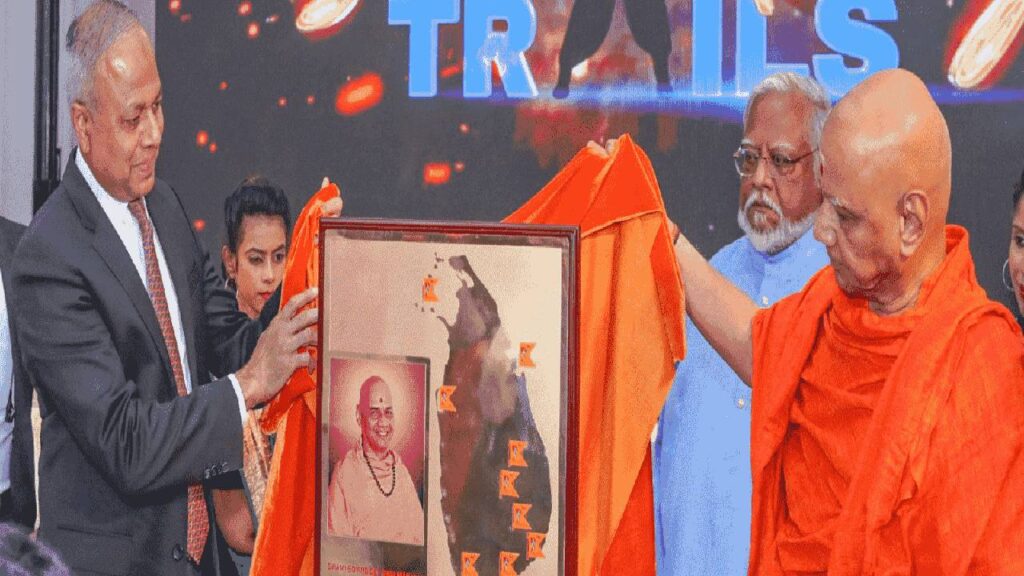
Swami Govind Dev Giri Maharaj, the Treasurer of the Shri Ram Janmabhoomi Teerth Kshetrra Trust, was at the heart of an exciting event in Colombo recently. The occasion marked the launch of the ‘Ramayan Trail – The Sacred Mission’ project, a significant step in Sri Lanka’s spiritual and cultural journey. Joined by esteemed guests including President’s Chief of Staff Sagala Ratnayake, former Member of European Parliament Neranjan Deva Aditya, former Speaker Karu Jayasuriya, and Indian High Commissioner to Sri Lanka Santosh Jha, Swami Govind Dev Giri Maharaj unveiled a new chapter in Sri Lanka’s heritage. The project, ‘Shree Ramayan Trails,’ is set to rejuvenate nine key sites across Sri Lanka, transforming them into world-class monuments that showcase the spiritual and historical essence of the epic Ramayana. From Adam’s Bridge to Kataragama Ramayana Trail, these locations hold profound significance and will serve as sacred pilgrimage sites. Backed by an initial investment of US$ 50 million, the project aims to create spaces that resonate with devotees and spiritual seekers alike. Swami Govind Dev Giri Maharaj emphasized that Sri Lanka transcends geographical boundaries; it’s a sacred land where divine events unfolded, appealing to people across cultures. He underscored Sri Lanka’s unique place in the Ramayana narrative, highlighting it as more than just a landmass but a hallowed ground deeply intertwined with spiritual beliefs. In light of this rich legacy, Swami Govind Dev Giri Maharaj called for unity in preserving and celebrating these ancient bonds, ensuring that they continue to inspire generations to come. The ‘Ramayan Trail – The Sacred Mission’ project embodies a shared commitment to honoring the spiritual heritage that unites Sri Lanka and India, fostering cultural exchange and promoting peace and harmony. As the journey unfolds, it promises to weave together stories of faith, devotion, and shared humanity, inviting all to embark on a pilgrimage of the heart.
Shell Global in Sri Lanka : Fuel Distribution Across 150 Stations

Shell Global, a renowned name in the global energy sector, is set to make its mark in Sri Lanka as it commences fuel distribution operations starting Friday, the 22nd of March. With a network spanning across 150 filling stations, Shell Global aims to provide high-quality fuel and exceptional service to motorists across the country. The inaugural shipment of Shell-RM Parks fuel, representing a significant milestone in Sri Lanka’s energy landscape, arrived at the Colombo Port on Thursday morning, the 21st of March. This collaboration between Shell Global and RM Parks marks a promising venture, combining Shell’s expertise in the energy sector with RM Parks’ local insights and infrastructure. Shell Global, with its roots tracing back to the late 19th century, has established itself as a leading player in the global energy market. The company’s commitment to innovation, sustainability, and customer satisfaction has earned it a reputation for reliability and excellence. As Shell Global expands its footprint into Sri Lanka, motorists can expect access to a wide range of fuel products designed to meet the diverse needs of modern vehicles. Additionally, Shell’s dedication to environmental responsibility ensures that its operations align with Sri Lanka’s sustainable development goals. With the commencement of fuel distribution operations, Shell Global looks forward to contributing to Sri Lanka’s economic growth while providing motorists with a trusted partner on their journey. As the company embarks on this new chapter, it remains committed to delivering value to its customers, stakeholders, and the community at large. Brief History :- Shell Global, a cornerstone in the global energy industry, traces its origins back to the late 19th century. Founded in 1907 through the merger of Royal Dutch Petroleum Company and Shell Transport and Trading Company, the company’s inception marked the beginning of a legacy that would shape the modern energy landscape. Throughout its history, Shell has been at the forefront of innovation and exploration in the oil and gas sector. Pioneering advancements in drilling technology, refining processes, and distribution networks, Shell played a pivotal role in meeting the world’s growing energy demands. Over the decades, Shell expanded its operations across the globe, establishing a presence in over 70 countries and territories. From the discovery of major oil fields to the development of new energy sources, Shell has consistently pushed the boundaries of what is possible in the energy industry. Beyond its core business activities, Shell has also been a leader in sustainability and corporate responsibility. The company has made significant investments in renewable energy, carbon capture and storage, and environmental conservation initiatives, reflecting its commitment to addressing the challenges of climate change and promoting a more sustainable future. Today, Shell Global stands as one of the world’s largest and most diversified energy companies, with a portfolio that includes exploration and production, refining and marketing, chemicals, and renewable energy. As it continues to navigate the complexities of the modern energy landscape, Shell remains committed to driving progress and delivering value to its stakeholders while upholding its core principles of safety, integrity, and respect for people and the planet.
How ‘democratic’ U.S. callously disregards humanitarian values

The U.S. has been holding high the banner of “openness,” “freedom” and “equality.” But in reality, these universal values have been the first to be sacrificed by American elites for self-interests. Internationally, the “democratic” U.S. has shown its unrivalled bullying skills in interactions with countries it deems as rivals. Over the past few years, the United States – under its “small yard, high fence” containment strategy – has escalated its efforts to hinder China’s technological progress. Through measures such as export controls and investment restrictions, Washington has constructed a “high fence” obstructing exchanges between China and the U.S. in the field of high-tech. Washington’s “small yard, high fence” strategy is making a rod for its own back, which will ultimately harm American companies. Decoupling has resulted in a significant reduction in sales for U.S semiconductor companies in the Chinese market. Boston Consulting Group estimates that American companies could lose 18 percentage points of global share and 37 percent of their revenues if the U.S. government continues to pursue decoupling and bans domestic semiconductor companies from selling to Chinese firms. But apparently, Washington does not care as long as it can harm rival countries. Domestically, the U.S. government has shown no respect for humanitarian values either. Take the immigration issue as an example. The U.S. is a nation of immigrants; but the country’s treatment of immigrants is a history with inhumane tragedies. Even in the 21st century, human rights violations against immigrants see no improvement. The young migrants at Customs and Border Protection facilities in Donna, Texas, U.S. /AP Upon crossing the U.S. border, migrants see their “American Dream” transform into a nightmare. Adults have been detained while their young children, who entered with them, were forcibly separated and placed in separate accommodations. Even infants – as young as four months old – have been subjected to this cruel separation. The children were held incommunicado in emergency border patrol facilities or shelters under the supervision of government contractors, confined within metal-fenced cages, sleeping on bare floors covered with foil blankets. Their anguished cries for their parents echo through these facilities, while their basic human rights remain unmet. The American Academy of Pediatricians rightly labels this as “government-sanctioned child abuse.” Sadly, no solution can fully heal the trauma inflicted upon these families. As the Texas Civil Rights Project, a legal aid organization, states “either the government wasn’t thinking at all about how they were going to put these families back together, or they decided they just didn’t care.” Worse still, American politicians are using the issue as a political leverage. Some Republican governors have transported illegal immigrants from theirs to blue (Democratic) states – all in an attempt to embarrass the federal government, according to media reports. Shouting “democracy,” American politicians only care about self-interests, manipulating every possible tool to attack rivals. In this context, political fighting has become an every-day event in the United States: Former President Donald Trump faces allegations of property fraud; President Joe Biden is currently under investigation for impeachment; the federal government has experienced frequent shutdown crises. Rep. Richard Hudson (left) pulls Rep. Mike Rogers back as they talk with Rep. Matt Gaetz and others during the 14th round of voting for speaker as the House meets for the fourth day to try and elect a speaker and convene the 118th Congress in Washington, January 6, 2023. /Getty Over the past decades, differences between the two parties were resolved through compromise, with politicians acting in the interests of their respective backing interest groups. However, U.S. politics today is witnessing polarization, with demands from interest groups becoming more divergent and uncompromising. Cross-party cooperation and consensus have become nearly impossible. Such an intense political climate has spilled over into U.S. society, manifesting itself in increased threats of politically motivated violence and attacks. Since the Capitol riots on January 6, 2021, the United States has witnessed numerous cases of political violence, often incited by “lone wolf” attackers or occurring during rival group demonstrations and rallies. Analysts warn that the United States may be heading towards widespread political violence, according to The Guardian. The United States feels complacent, playing the role of “human rights preacher,” harping on about others’ human rights conditions. However, it has been blatantly suppressing other countries’ growth, violating the human rights of tens of thousands of migrants drawn to its shores by the “beacon of democracy” and wantonly attacking political rivals at the cost of normal operation of the government. The “democratic” U.S. has demonstrated to the world how it has callously disregarded humanitarian values. (If you want to contribute and have specific expertise, please contact us at opinions@cgtn.com. Follow @thouse_opinions on Twitter to discover the latest commentaries in the CGTN Opinion Section.)
CGTN’s Global South Voices unmasks the illusion of Western democracy

“And we are seeing this historical change where the center of gravity once in the West,now the rise of the Global South,” said Senator Mushahid Hussain Sayed, chairman of Pakistan’s Senate Defense Committee at CGTN show Global South Voices. The programme compared China’s democracy with Western democracy in terms of their respective value systems as well as their views on the world, national development, security and trust. The third “Summit for Democracy,” initiated by the Biden administration of the U.S., is taking place in Seoul, South Korea between March 18 and 20. As the summit appears to have decreasing influence, a prominent fact is beginning to emerge: The world is losing faith with the kind of “democracy” which is championed by the West. Democracy can manifest itself in various forms, and party elections are just one method among many, not a universal standard. Democracy is inherently diverse, and there exists no singular path to its realization. With the ascent of Global South countries, the actions of the West, cloaked in the rhetoric of “democracy” but straying from democratic principles, are increasingly frowned upon by the international community. Fred M’membe pointed out that Western countries are hypocritical on Gaza: “A country that tries to dominate others cannot claim to be [a] democracy. A country that thrives on the exploitation, the humiliation of others cannot claim to be democratic. And a country that is dominated by others, that is humiliated by others can also not be democratic.” He condemned the coldness of the West, as they witness people die every day but try nothing in real efforts to stop the conflict. He praised China for playing an active role in bringing peace to the world.Keith Bennett criticized Western countries’ irresponsibility in fulfilling their commitments: “They still have this winner-takes-all, beggar my neighbor approach. We saw it with their use of vaccine diplomacy, and we’re seeing it. But theirs is a completely irresponsible attitude to the huge threat of climate catastrophe and climate catastrophe is not going to spare the United States.” To address the common challenges facing humanity, Bennett believes that China’s proposal of “building a community with a shared future” can help a lot. “It’s actually essential if we, as a species, are going to continue to meet the challenges that all of humanity is facing now.”In addition, Einar Tangen pointed out that the people who are in power in the U.S. are failing the system. He added “So, you have a situation where the idea was that democracy can deliver, but today it is not. If you look at politics, and this is not only in the United States, but democratic systems that are championed by the U.S. What are they delivering? Leaders?” In contrast, “All of the system in China drives towards consensus. It tries to get everybody working in the same direction.”
Sai Pallavi, a talented actress From Indian Cinema
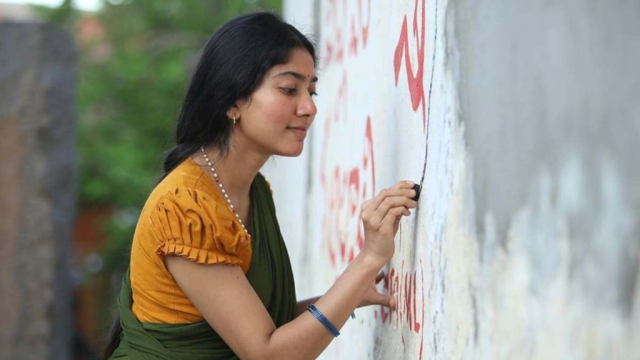
Introduction: Meet Sai Pallavi, a talented actress. from Tamil Nadu, India. She is not only a doctor but also a fantastic dancer. Let’s dive into her journey in the world of movies and discover what makes her special. Early Life: Sai Pallavi was born in Tamil Nadu in 1992. While she studied to become a doctor in Georgia, her love for acting and dancing brought her to the film industry. Premam Debut: She made her debut in the Malayalam movie “Premam” in 2015. People loved her role as Malar, a college lecturer. This film made her popular not only in Kerala but all-over South India. Dance and Acting Skills: Sai Pallavi is not just an actress; she is also an excellent dancer. Trained in Bharatanatyam, she brings grace and natural charm to her performances, making her stand out in the competitive world of movies. Fidaa Success: Her entry into Telugu cinema with “Fidaa” was a turning point. In the movie, she played Bhanumathi, a strong and independent character, breaking stereotypes and winning hearts. Tamil Cinema Journey: Sai Pallavi has also made a mark in Tamil cinema with films like “Maari 2” and “NGK.” Her ability to adapt to different roles shows her versatility. Beyond Movies: Apart from her acting, Sai Pallavi is known for her work outside the cinema. She actively supports organ donation awareness, using her medical background for a good cause. What’s Next: Fans are excited about Sai Pallavi’s upcoming projects. With her diverse roles, she continues to impress audiences and take on new challenges in her career. Summary Sai Pallavi, a talented actress, journey is an inspiring story of a multi-talented individual making a mark in Indian cinema. From her early days to breaking stereotypes and advocating for important causes, she is a star with a unique blend of skills and passion. Keep an eye on her, as she continues to shine in the world of movies.
Rosalind Rosy Senanayake: A Journey from Miss World 1985 to Public Service

In the realm of beauty pageants, where glamour meets grace, Rosalind Rosy Senanayake carved her name in history. Rosy Senanayake Crowned as Miss World in 1985, her story extends far beyond the glitz of the stage, painting a portrait of resilience, dedication, and service to her country, Sri Lanka. Early Life and Entry into Miss World Born on January 17, 1961, in Colombo, Sri Lanka, Rosy Senanayake exhibited her charm and elegance from a young age. Her foray into the world of pageantry began as she participated in local beauty contests. Her captivating presence and intelligence paved her way to the Miss Sri Lanka title, marking her entry into the prestigious Miss World competition. The Miss World Triumph Senanayake’s journey to the Miss World title in 1985 was more than a victory for herself; it was a moment of pride for her nation. With grace, poise, and a heartwarming smile, she captured the attention of the world, showcasing the beauty and cultural richness of Sri Lanka. Her win was celebrated as a symbol of Sri Lankan excellence and elegance. Beyond the Crown: A Journey in Public Service While the Miss World crown solidified her place in the annals of beauty pageants, Rosy Senanayake’s true calling lay in serving her country. She ventured into politics, driven by a passion for social change and a desire to make a tangible difference in the lives of her fellow citizens. Her political career was marked by dedication and service. Senanayake held various positions, including Deputy Minister of Child Development and Women’s Affairs, demonstrating a fervent commitment to empowering women and advocating for children’s rights. Her initiatives aimed to uplift underprivileged communities, focusing on education, healthcare, and socio-economic development. Philanthropy and Advocacy Work Outside the political sphere, Rosy Senanayake continued her philanthropic efforts. She remained actively involved in charitable causes, working towards the betterment of society. Her endeavors spanned diverse areas, from championing environmental conservation to supporting initiatives promoting women’s empowerment and healthcare access. Legacy and Impact Senanayake’s legacy extends beyond her achievements in beauty pageants and politics. Her unwavering dedication to public service and philanthropy serves as an inspiration, encouraging individuals to use their platforms and abilities to create positive change in the world. Conclusion Rosalind Rosy Senanayake’s life journey embodies the essence of grace, resilience, and service. From the heights of winning the Miss World title to her impactful contributions in politics and philanthropy, she remains an iconic figure in Sri Lanka, leaving an indelible mark on both the pageant world and the realm of public service. Her story stands as a testament to the transformative power of passion and dedication in making a meaningful difference in society.
Poya Day In Sri Lanka
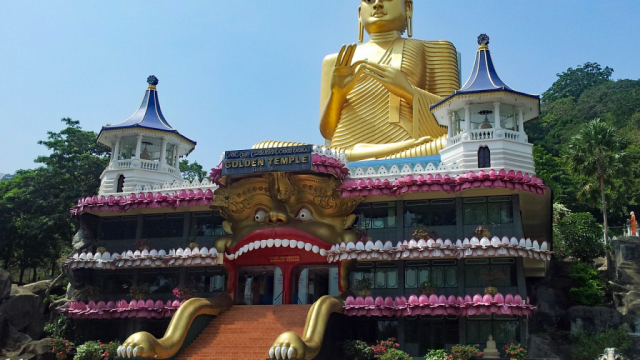
Poya Day is a monthly Buddhist holiday in Sri Lanka that is celebrated on the full moon day of each month. As 70% of Sri Lankans are Buddhist, most of the population celebrates each Poya Day as of religious significance. The fact that the moon is largest and brightest when it is full is the rationale behind full moons being occasions for celebration. On Poya Days, Sri Lankan workers are legally guaranteed a paid off-work day, unless they are paid time and a half by their employer during Poya Day hours. Most businesses will be closed, and alcoholic beverages and meat are not allowed to be sold until the Poya is over. There are around a dozen Poya Days every year, in conformity with the Buddhist lunar calendar and moon-phase marking system 1. Each full moon, and each corresponding Poya Day, has its own name and specific events it is meant to commemorate . For instance, Bak Full Moon Poya Day commemorates the second visit of The Buddha to Sri Lanka which took place in the fifth year of his Supreme Enlightenment . If you’re planning to visit Sri Lanka, it’s worth experiencing Poya Day celebrations. You can witness the religious rituals and customs of the locals and enjoy the serene and peaceful atmosphere of the temples.
“Anjali Derana Dream Star: The Rising Star of Derana Dream Star”

Derana Dream Star is a popular singing competition in Sri Lanka. The show has been running for several seasons and has produced many talented singers. Anjali Herath is one of the contestants who participated in the 11th season of the show. She is a young and talented singer who has won the hearts of many with her melodious voice. Anjali Herath’s performance in the show was exceptional. She sang a song called “Kimada Sumihiriye” which means “How beautiful is the smile” in English . Her performance was well received by the judges and the audience alike. She has a unique voice that is both soothing and powerful at the same time. Anjali Herath’s journey in the show was not an easy one. She had to compete with many other talented singers to reach the finals. However, her hard work and dedication paid off when she was declared the winner of the 11th season of the show. Her victory was well deserved and she has become an inspiration to many young singers in Sri Lanka. Anjali Herath’s success in the show has opened many doors for her. She has been invited to perform at many events and has become a popular figure in the Sri Lankan music industry. Her fans are eagerly waiting for her next performance and are excited to see what the future holds for this talented singer. In conclusion, Anjali Derana Dream Star is a great platform for young and talented singers to showcase their skills. Anjali Herath is a shining example of what hard work and dedication can achieve. Her victory in the 11th season of the show has made her a household name in Sri Lanka and has inspired many young singers to follow in her footsteps.
2004 Tsunami Remembering: 5 Essential Facts

The devastating Indian Ocean tsunami of 2004 remains etched in our collective memory as one of the deadliest natural disasters in recorded history. Triggered by a powerful undersea earthquake, it unleashed a catastrophic series of waves that wreaked havoc across numerous countries bordering the Indian Ocean. Here are five crucial facts that shed light on the enormity and impact of this tragic event: 1. Magnitude and Epicenter in 2004 Tsunami The earthquake that instigated the tsunami occurred on December 26, 2004, off the western coast of northern Sumatra, Indonesia. With a staggering magnitude of 9.1 to 9.3, it ranks as one of the most powerful quakes ever recorded. The epicenter lay beneath the Indian Ocean, approximately 160 kilometers (100 miles) west of northern Sumatra. 2. Devastating Waves in 2004 Tsunami Following the seismic rupture, colossal waves radiated outward in all directions, reaching heights that surpassed 100 feet (30 meters) in some areas. The tsunami waves, traveling at incredible speeds of up to 500 miles per hour (800 kilometers per hour), slammed into the coastlines of 14 countries, causing widespread destruction. 3. Enormous Human Toll in 2004 Tsunami The human toll of the 2004 tsunami was catastrophic. Over 230,000 people lost their lives across the affected nations, and countless more suffered severe injuries and displacement. Indonesia bore the brunt of the disaster, accounting for the majority of casualties, followed by Sri Lanka, India, Thailand, and several other countries. 4. Global Response and Humanitarian Aid The scale of the tragedy prompted an unprecedented global humanitarian response. Countries, international organizations, and countless individuals rallied to provide aid and support to the affected regions. Relief efforts included medical assistance, food and water supplies, infrastructure rebuilding, and long-term rehabilitation programs aimed at helping communities recover and rebuild their lives. 5. Environmental and Societal Impact Beyond the immediate loss of life and infrastructure damage, the 2004 tsunami had long-lasting environmental and societal consequences. Coastal ecosystems were disrupted, and the livelihoods of thousands who depended on fishing and tourism were severely affected. The disaster also highlighted the importance of early warning systems and disaster preparedness in vulnerable regions prone to such natural calamities. Reflecting on Lessons Learned from 2004 Tsunami The 2004 Indian Ocean tsunami serves as a somber reminder of the unpredictable and destructive power of natural disasters. It underscored the necessity for improved disaster preparedness, early warning systems, and international cooperation to mitigate the impact of future catastrophes. While significant progress has been made in disaster risk reduction since then, the event continues to influence policies and strategies aimed at ensuring the safety and resilience of communities worldwide. As we remember the lives lost and the widespread devastation caused by the 2004 tsunami, let us honor their memory by striving for a more resilient and prepared world in the face of natural disasters.
Protecting Sri Lanka’s Coconuts from White Flies

A smart student from Kurunegala Defence Services College found a great way to stop white flies from hurting Sri Lanka’s coconut trees. Thushara Sewwandi Basnayake, who is in 11th grade, made a trap that works really well. She even won gold medals in contests for making such a clever thing. Her trap tricks the white flies by using what they like: the color yellow and the smell of coconut trees. Basnayake made something that smells like the tree and looks yellow to attract the pests. She figured out that these flies are most active from 3 to 4 in the morning. So, she made her trap even smarter by adding solar lights. These lights shine on a sticky sheet with a special substance. When the flies come buzzing around, they get stuck. This cool idea could help stop these flies from causing big problems for Sri Lanka’s coconut farms. It’s a good solution because it doesn’t use harmful chemicals that hurt the environment. It might make things better for the country’s coconut industry in the long run. People have noticed how awesome Basnayake’s invention is. She got gold medals in competitions because of how smart and creative her trap is.