
Russia Pledges Comprehensive Support for Sri Lanka’s Healthcare Transformation
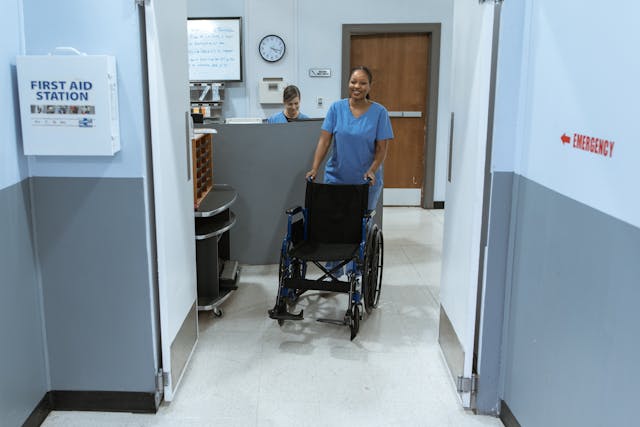
COLOMBO, Sri Lanka – May 5, 2026 – In a significant development poised to revolutionize Sri Lanka’s healthcare landscape, Russian Health Minister Mikhail Murashko concluded a high-profile three-day official visit to the island nation, reiterating Russia’s unwavering commitment to bolstering Sri Lanka’s health infrastructure. The visit, which commenced on May 3rd, 2026, saw intensive discussions and observations aimed at forging a robust partnership focused on modernizing and strengthening the nation’s medical services, with particular emphasis on cutting-edge technology and primary care enhancements. High-Level Dialogues Chart Future of SL-Russia Health Cooperation to improve Sri Lankan health care The core of Minister Murashko’s visit revolved around crucial high-level discussions held in Colombo on May 4th, 2026, with Sri Lanka’s Minister of Health and Mass Media, Dr. Nalinda Jayatissa. During these pivotal talks, the Russian delegation conveyed Russia’s readiness to extend comprehensive support to fortify Sri Lanka’s healthcare system. The extensive agenda encompassed a wide array of areas crucial for the development of a resilient and advanced health sector in Sri Lanka. Also present at the meetings were Deputy Minister of Health Dr. Hansaka Wijemuni and Russian Ambassador to Sri Lanka Levan Dzhagaryan, underscoring the diplomatic significance of these exchanges. Minister Murashko’s visit was not confined to diplomatic tables. On May 4th, 2026, the Russian delegation also undertook a special observation visit to prominent Sri Lankan medical institutions, including the National Hospital of Colombo and the Faculty of Medicine at the University of Colombo. These visits were integral to understanding Sri Lanka’s existing health facilities and identifying specific areas where Russian expertise and resources could be most effectively deployed to strengthen these institutions with modern technology and facilitate knowledge exchange. Pivoting Towards Primary Healthcare and AI Integration A cornerstone of the proposed cooperation lies in the significant upgrade of Sri Lanka’s primary healthcare services. Both ministers engaged in in-depth discussions on how to enhance these foundational services, recognizing their critical role in national well-being. A key focus was the integration of modern technological solutions, notably Artificial Intelligence (AI), into the health sector. The Russian Minister elaborated on Russia’s commitment to prioritizing primary healthcare through meticulously planned methodologies to deliver quality services and highlighted Russia’s active development and utilization of modern medical equipment and advanced technologies, including AI-based systems. The Russian delegation further showcased an advanced AI-based technological system developed in Russia. This innovative system is capable of identifying and diagnosing 42 different diseases prevalent in both agricultural and urban areas, incorporating laboratory services and pediatrics. This demonstration underscores the practical applications of AI that Russia is prepared to share, signalling a potential paradigm shift for disease detection and diagnosis in Sri Lanka. Sri Lankan Minister Dr. Jayatissa, in turn, briefed his Russian counterparts on Sri Lanka’s ongoing program to reinforce primary healthcare and underscored the urgent need to integrate advanced technology and modern medical equipment into the national system. Bolstering Pharmaceutical Production and Medical Education Beyond technology and primary care, the discussions extensively covered strengthening pharmaceutical manufacturing and supply chains between the two nations. This collaboration could significantly enhance Sri Lanka’s self-sufficiency in essential medicines and improve the reliability of its drug supply. Furthermore, Russia expressed its readiness to provide advanced medical education opportunities for Sri Lankan doctors. This commitment to human resource development is a vital component of the long-term vision for an upgraded healthcare system, ensuring that Sri Lankan medical professionals are equipped with the latest knowledge and skills. In a broader gesture of support, Minister Murashko also indicated Russia’s willingness to assist Sri Lanka in overcoming existing challenges, including those related to the energy sector. This broader offer of cooperation highlights the deepening bilateral ties that extend beyond the immediate healthcare sphere. Towards a Future of Enhanced Bilateral Health Ties The fruitful discussions are expected to culminate in the signing of a Memorandum of Understanding (MoU) between the Ministry of Health of the Russian Federation and Sri Lanka’s Ministry of Health and Mass Media. This MoU will serve as a framework to advance cooperation through closer coordination, ensuring that the ambitious plans discussed translate into tangible outcomes. Further cementing the spirit of collaboration, Minister Murashko extended a warm invitation to Minister Jayatissa and other Sri Lankan health officials to visit Russia. The purpose of this visit would be to gain firsthand exposure to Russia’s healthcare system, observe its modern medical equipment, and study its AI-supported treatment services. Such exchange programs are crucial for fostering mutual understanding and facilitating the effective transfer of knowledge and best practices. This recent engagement underscores the longstanding friendly relations between Sri Lanka and the Russian Federation. The pledge of comprehensive support from Russia signals a new era for Sri Lanka’s healthcare system, promising advancements in primary care, technology integration, pharmaceutical capabilities, and medical expertise, ultimately benefiting the health and well-being of the Sri Lankan people.
Sri Lanka Gears Up for Grand Vesak Week 2026: A Focus on Spirituality and Community
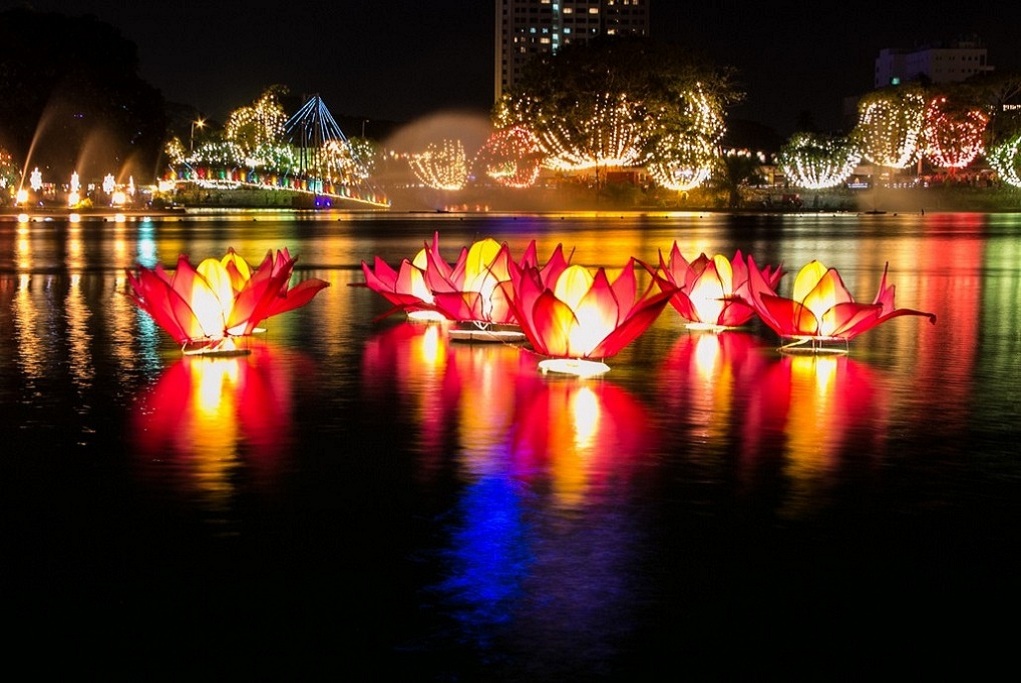
As the sacred season of Vesak approaches, Sri Lanka is poised for a unique and spiritually enriching observance in 2026. While Vesak Full Moon Poya Day was initially designated for May 1st, coinciding with International Workers’ Day, recent official declarations have shifted the focus to a profound week-long celebration, emphasizing spiritual rejuvenation and community welfare. This up-to-the-minute report brings you the latest developments and the detailed program for Vesak Week, running from May 27 to June 2, 2026. Official Declarations: Vesak Week Rescheduled for a Spiritual Focus A notable update in Sri Lanka’s 2026 Vesak calendar stems from a significant decision by the government, influenced by requests from the revered Mahanayake Theros. Though May 1st was initially marked as Vesak Poya Day, the State Vesak Festival for this year will officially take place on May 30, 2026. Furthermore, the day following this principal observance, May 31, 2026, has been gazetted as a public holiday, revising an earlier declaration for May 2nd. The Ministry of Public Administration, Provincial Councils and Local Government, in conjunction with other relevant bodies, has officially declared a dedicated Vesak Week from May 27 to June 2, 2026. This extended period is designed to facilitate widespread participation in religious and community-focused activities, moving away from purely entertainment-driven events. The overarching theme for the 2026 State Vesak Festival, “Abhittharetha Kalyana” (Let us unite for the common good), perfectly encapsulates this renewed commitment to collective spiritual and social upliftment. A Nationwide Call for Spiritual Rejuvenation The revised schedule and the declaration of Vesak Week underscore a conscious effort by the Sri Lankan government to foster a deeper, more meaningful observance of this thrice-blessed day. Under the guidance of the All Ceylon Shasanarakshaka Mandalaya and in collaboration with the Ministry of Buddhasasana, Religious and Cultural Affairs and the Department of Buddhist Affairs, a comprehensive national program is being rolled out. Official guidelines emphasize that all institutions must organize religious programs that genuinely promote spiritual development and community service, strictly advising against entertainment-focused events. This directive aims to refocus the celebrations on the core tenets of Buddhism—compassion, generosity, and mindfulness—encouraging a more reflective and meritorious engagement from the public. A Week-Long Calendar of Observances: May 27 – June 2 The officially circulated Vesak Week Circular 2026 provides a detailed itinerary of planned activities, ensuring a structured approach to the nationwide observances. Each day is dedicated to a specific aspect of Buddhist practice and community engagement: These meticulously planned activities underscore Sri Lanka’s commitment to observing Vesak not merely as a holiday, but as a holistic period for ethical conduct, spiritual advancement, and social responsibility. Traditional Vesak Decorations and Acts of Generosity While the focus remains on spiritual and community development, the vibrant traditions that define Vesak in Sri Lanka will undoubtedly continue, albeit within the new guidelines. Iconic digital light displays known as thoranas—narrating Jataka Tales—and colorful lanterns will adorn streets and homes, creating a festive yet reverent atmosphere. Acts of immense generosity, particularly the setting up of dansal stalls offering free vegetarian meals and refreshments, will symbolize the Buddhist principle of giving (Dana). It’s also noteworthy that, as is customary during Vesak, all liquor stores and slaughterhouses will be closed by government order, reflecting a nationwide commitment to non-violence and abstinence. The Enduring Message of Vesak in a Modern Context Vesak commemorates the birth, enlightenment, and passing of Gautama Buddha, embodying his timeless teachings of peace, compassion, and non-violence. In 2026, Sri Lanka’s structured Vesak Week aims to powerfully reinforce these foundational Buddhist values. By shifting the emphasis towards mindful participation and community service, the nation seeks to inspire its citizens to integrate these principles into their daily lives, fostering harmony and ethical living. This year’s observances serve as a testament to Sri Lanka’s dedication to preserving the spiritual essence of Vesak, ensuring that its profound message resonates deeply across all communities, contributing to a more peaceful and compassionate society.
Sri Lanka Cricket in Crisis: Administration Overhaul Underway Amidst Mass Resignations
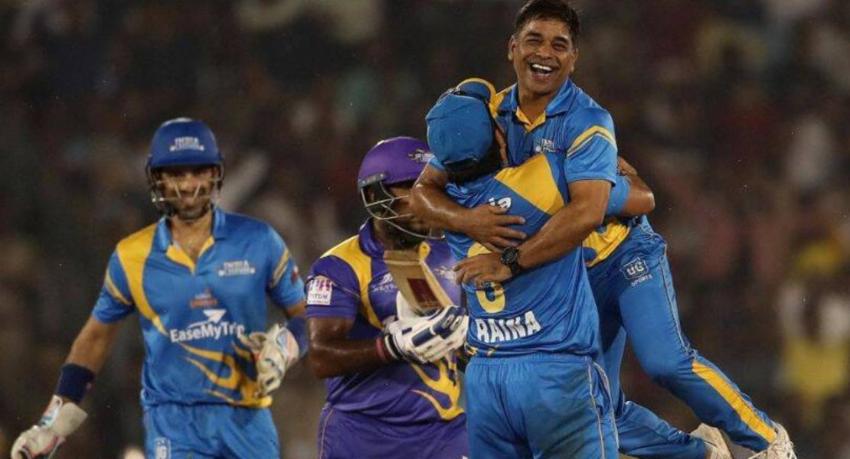
COLOMBO, Sri Lanka – April 29, 2026 – Sri Lanka Cricket (SLC) finds itself at the epicenter of a monumental administrative shake-up, as its entire Executive Committee, including President Shammi Silva, tendered their resignations effective today. This dramatic development, confirmed by the Ministry of Youth Affairs and Sports, plunges the nation’s most cherished sport into a new era of uncertainty and promises significant structural reforms. The government has swiftly moved to temporarily assume control of all administrative functions, a decision stemming from mounting allegations of financial irregularities, persistent mismanagement, and a string of disappointing national team performances on the international stage. Mass Resignations Pave Way for Government Intervention in Sri Lanka Cricket The cascade of resignations, which saw not only Shammi Silva, who had led SLC for nearly seven years across four consecutive terms, but also all other office bearers and members of the Executive Committee step down, marks a pivotal moment in Sri Lankan cricket history. The move follows intense pressure from government authorities, with reports indicating that Sri Lankan President Anura Kumara Dissanayake had engaged in discussions with Silva over the weekend, advocating for a restructuring of the board and the introduction of fresh governance. Public anger over alleged corruption and the national team’s consistent underperformance, particularly their early exits from the 2023 ODI World Cup and the 2024 and 2026 T20 World Cups, served as significant catalysts for this forceful intervention. On Wednesday, the Ministry of Youth Affairs and Sports formally announced its decision to bring all administrative functions of Sri Lanka Cricket under its temporary purview. This critical step has been taken in accordance with the powers vested in the Minister under Sections 31 and 34 of the Sports Act No. 25 of 1973. This direct government oversight signals a clear intent to address the deep-seated issues that have plagued the institution for years. The Road Ahead for Sri Lanka Cricket: Interim Committee and Potential ICC Scrutiny With the current administration dissolved, the immediate focus shifts to the appointment of a new interim committee. The Ministry has stated that this committee will be established shortly, with a mandate to tackle the ongoing administrative challenges and implement comprehensive structural reforms aimed at improving the governance of the sport. While no official announcement has been made regarding the composition of this interim body, speculation is rife that it could be headed by former State Minister and opposition politician Eran Wickramaratne. Additionally, respected former cricketers Sidath Wettimuny and Roshan Mahanama are reportedly being considered for key roles within the new setup, bringing much-needed cricketing expertise and credibility to the forefront. However, this government intervention is not without its inherent risks. The International Cricket Council (ICC) maintains strict regulations against political interference in the administration of its member boards, a principle it has upheld rigorously in the past. Sri Lanka Cricket experienced a two-month suspension from the ICC in November 2023, which was only lifted in January 2024, precisely due to concerns over government involvement. The ICC’s consistent stance has been to recognize only democratically elected leadership, irrespective of domestic allegations of corruption. Any perception of undue state control over the new interim committee could trigger further sanctions, potentially impacting funding and the country’s ability to host international tournaments. A History of Turmoil and the Push for Stability Sri Lanka Cricket, despite being the country’s wealthiest sporting body, has long been marred by allegations of corruption and administrative mismanagement. Shammi Silva’s tenure, while overseeing some success such as Asia Cup titles for both men’s and women’s teams, also coincided with a noticeable decline in the national team’s rankings and their struggles in major ICC events. Even the recent appointment of renowned coach Gary Kirsten failed to quell the growing public discontent and calls for a leadership overhaul. The current situation echoes past episodes of friction between the government and the cricket board, highlighting a recurring pattern of governance challenges. The Sports Minister, Sunil Kumara Gamage, has officially accepted the resignations, emphasizing the need for robust reforms to restore credibility and stability to Sri Lankan cricket. The coming weeks will be crucial in determining the composition and autonomy of the new interim committee, as well as how the ICC responds to this latest chapter in Sri Lanka’s ongoing cricket administration saga. The hope remains that this significant overhaul will finally usher in an era of transparency, accountability, and sustained cricketing success for the island nation.
Fire Breaks Out at a Polythene Factory in Wattala
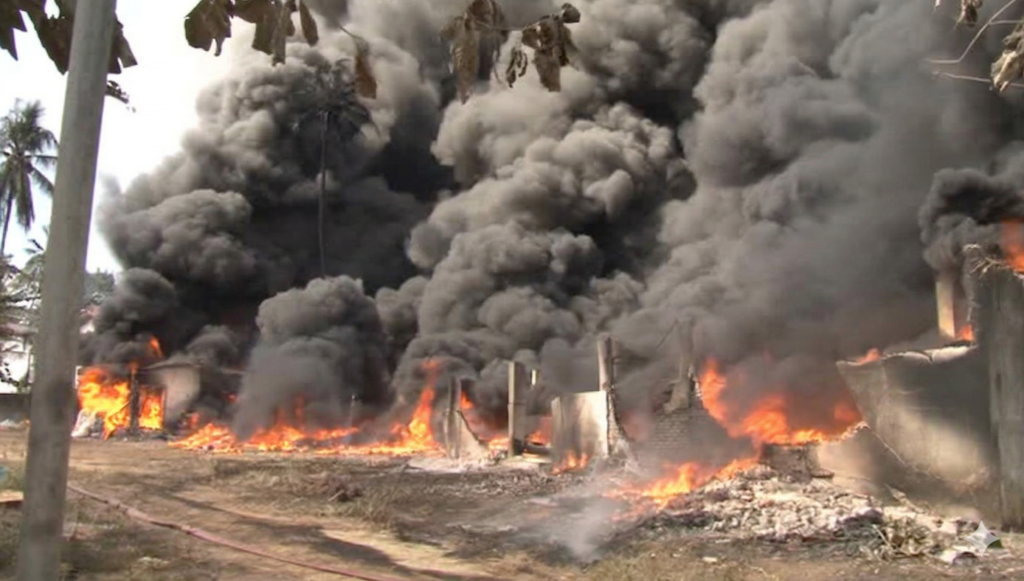
A significant fire broke out this morning, April 6, 2026, at a polythene manufacturing facility in the Mabola area of Wattala
Sleeping in Paradise: The Definitive Guide to Sri Lanka’s Best Hotels & Arrival Logistics (2026)
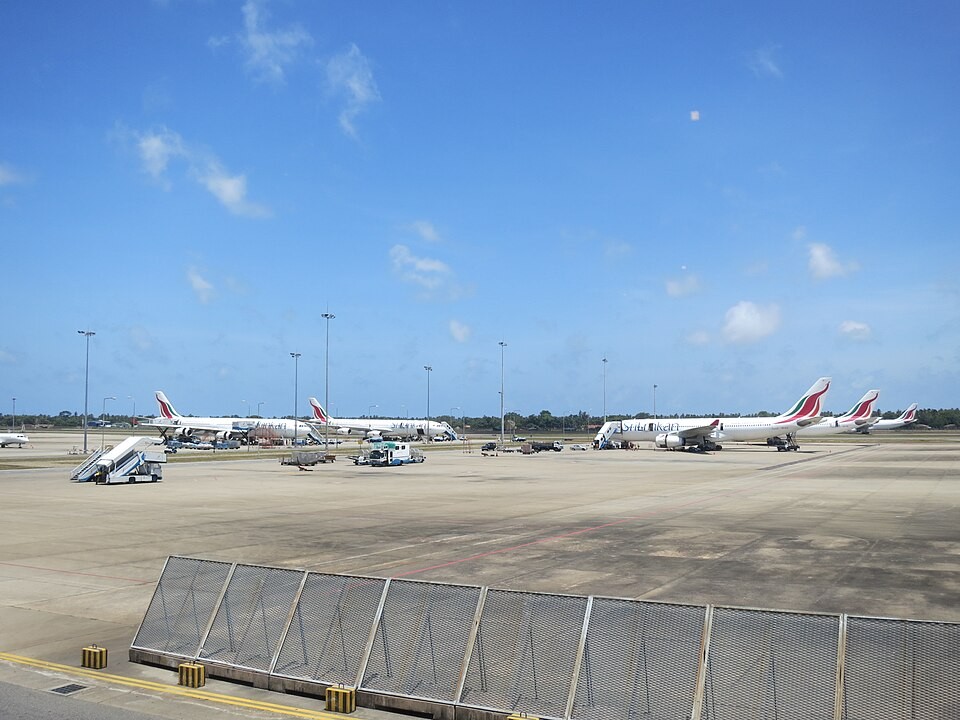
Best luxury hotels Sri Lanka. To sleep in Sri Lanka is to wake up inside a story. In the Cultural Triangle, you might rouse to the sound of grey langur monkeys chattering on your balcony, the jungle steaming in the dawn light. On the south coast, the Indian Ocean acts as your alarm clock, its rhythmic crash against the granite ramparts of a 17th-century Dutch fort signalling a new day. In the tea country, the mornings are silent, wrapped in a veil of mist that lifts to reveal emerald valleys stretching endlessly toward the horizon. Finding a place to stay here is not just about booking a room; it is about choosing the lens through which you will view this island. Whether you are seeking the colonial grandeur of the coast or the eco-conscious luxury of the deep jungle, this is your curated guide to Sri Lanka’s finest accommodations—and the logistical secrets to beginning your journey flawlessly. The Arrival Dilemma: Colombo or Negombo? This is the first question every traveller faces, and getting it wrong can ruin your first 24 hours. The Reality: Sri Lanka’s main airport, Bandaranaike International Airport (CMB), is not actually in Colombo. It is located in Katunayake, roughly 35 kilometers (22 miles) north of the capital. Scenario A: The Late Night Arrival (Land after 4:00 PM) Verdict: Stay in Negombo. If you land in the evening, do not drag yourself into Colombo traffic. Head to Negombo, a gritty but charming fishing town just minutes from the airport. It offers a soft landing with wide, golden beaches and a lively strip of restaurants. Scenario B: The City Slicker (Land before 2:00 PM) Verdict: Head to Colombo. If you land early and crave energy, history, and shopping, go to Colombo. It is a city of contrast, where chrome skyscrapers rise next to British colonial clubs. Scenario C: The “Time is Money” Traveller Verdict: Go Straight to the Interior. If you land at 6:00 AM, hire a driver and head straight to Sigiriya (4 hours) or Kandy (3.5 hours). You will be sipping tea by the pool before sunset, having saved a full day of travel. The Logistics: Escaping the Airport The moment you step out of the arrivals terminal, you will be greeted by a humid wall of tropical air and a crowd of taxi touts. Ignore the touts. Here is how to travel safely and without being scammed. 1. The “Peace of Mind” Option: Official Airport Taxi Counter Inside the arrivals hall (before the exit), there is a long desk labeled “Airport Taxi.” 2. The Tech-Savvy Option: PickMe or Uber Sri Lanka has its own ride-hailing app called PickMe (available on iOS/Android). Uber also works in Colombo and major cities. 3. The Fraud Warning Never get into a vehicle with a random person who approaches you saying, “Taxi? Taxi?” They will overcharge you or take you to their friend’s hotel. A Collection of Luxury Hotels in Sri Lanka: Where to Stay I have selected these best luxury hotels Sri Lanka not just for their thread count, but for their sense of place. 1. The Living Legend: Galle Face Hotel (Colombo) “The Oldest Hotel East of Suez” Walking into the Galle Face Hotel is like stepping onto a movie set from the 1920s. Established in 1864, it has hosted everyone from Che Guevara to Harrison Ford. The checkerboard marble floor, the heavy teak furniture, and the breeze rolling off the Indian Ocean create an atmosphere of timeless elegance. 2. The Eco-Masterpiece: Heritance Kandalama (Dambulla/Sigiriya) “The Hotel That Disappears” Designed by Sri Lanka’s legendary architect Geoffrey Bawa, this luxury hotel does not sit on the landscape; it is part of it. Built into a rock face overlooking the Kandalama tank (reservoir), the hotel is covered in vines and greenery, making it nearly invisible from a distance. 3. The Icon of the Hills: 98 Acres Resort & Spa (Ella) “A Nest in the Clouds” Perched on a 98-acre tea estate, this resort is the reason Ella went viral. The chalets are built from discarded railway sleepers and thatch, standing on stilts above the tea bushes. 4. The Safari Camp: Wild Coast Tented Lodge (Yala) “Where the Jungle Meets the Ocean” This is not camping; this is architecture. The “cocoons” (luxury tents) are designed to look like boulders scattered across the landscape, mimicking the massive rocks of the Yala coastline. 5. The Colonial Fortress: Amangalla (Galle Fort) “The Grand Dame of the South” Located inside the UNESCO-listed Galle Fort, Amangalla is a sanctuary of silence in a bustling town. Formerly the New Oriental Hotel, it retains its 17th-century Dutch bones with polished antique floors, high ceilings, and crisp white linen. Final Advice for the Discerning Traveller Sri Lanka is currently experiencing a tourism boom. The “hidden gems” are getting discovered. My advice? Book early. Whether you choose the vine-covered corridors of Kandalama or the sea-sprayed ramparts of Galle, remember this: in Sri Lanka, the hotel is not just a place to sleep. It is the destination itself.
A-Bay Calling: The Ultimate Guide to Sri Lanka’s Surfer Paradise (2026)
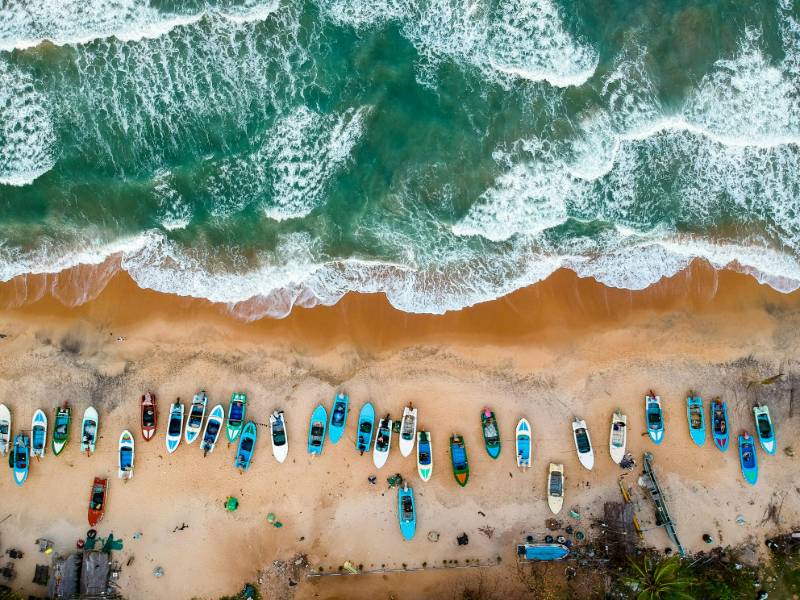
The road to the East Coast is long, but the reward is legendary. While the south coast of Sri Lanka is buzzing with hip cafes and Instagrammers, Arugam Bay (or simply “A-Bay” to the locals) moves to a different rhythm. It is raw, it is dusty, and it is undeniably cool. Here, the day is measured not in hours, but in swell forecasts. You wake up to the sound of peacocks, surf until your arms burn, eat spicy roti for lunch, and dance barefoot in the sand by midnight. Whether you are a pro surfer chasing the perfect right-hand point break or a traveler looking to spot wild elephants without the crowds, this is your 2026 guide to Arugam Bay. When to Go: The Surf Season Explained Arugam Bay surf season 2026:Sri Lanka has two monsoons, meaning the island is always in season somewhere. For Arugam Bay, timing is everything. The Surf Check: Where to Paddle Out A-Bay is famous for its point breaks—long, peeling waves that break over sand or reef-covered rock. 1. Main Point (The Legend) 2. Whiskey Point (The Party Wave) 3. Peanut Farm (The Hidden Gem) 4. Baby Point (The Nursery) Beyond the Board: Things to Do (For Non-Surfers) Arugam Bay isn’t just for surfers. It’s actually one of the wildest corners of Sri Lanka. 1. Safari in Kumana National Park Forget Yala and its traffic jams. Kumana National Park (often called Yala East) is just 45 minutes south. It is famous for its birdlife, but you have a very high chance of seeing leopards and bears here with zero other jeeps around. 2. Sunset at Elephant Rock This is the daily ritual. Grab a King Coconut, climb the rock at the southern end of the bay, and watch the sun dip behind the jungle. 3. Lagoon Safari in Pottuvil For a slower pace, take a traditional catamaran ride through the mangroves of Pottuvil Lagoon. You will see crocodiles sunbathing, eagles fishing, and monkeys jumping between trees. It’s pure magic at sunrise (6:00 AM). How to Get to Arugam Bay (2026 Transport Guide) This is the hardest part. A-Bay is located roughly 320km from Colombo. 1. The “Flashpacker” Route (Taxi) 2. The Scenic Route (Train + Taxi) 3. The Budget Soldier (Night Bus) Eat, Sleep, Repeat Final Local Tip Bring cash. While more places accept cards in 2026, the ATM in Arugam Bay is notorious for running out of money during long weekends. Stock up in a bigger town like Monaragala or Pottuvil before you arrive.
The Lion Rock: A Complete Guide to Conquering Sigiriya (2026 Edition)
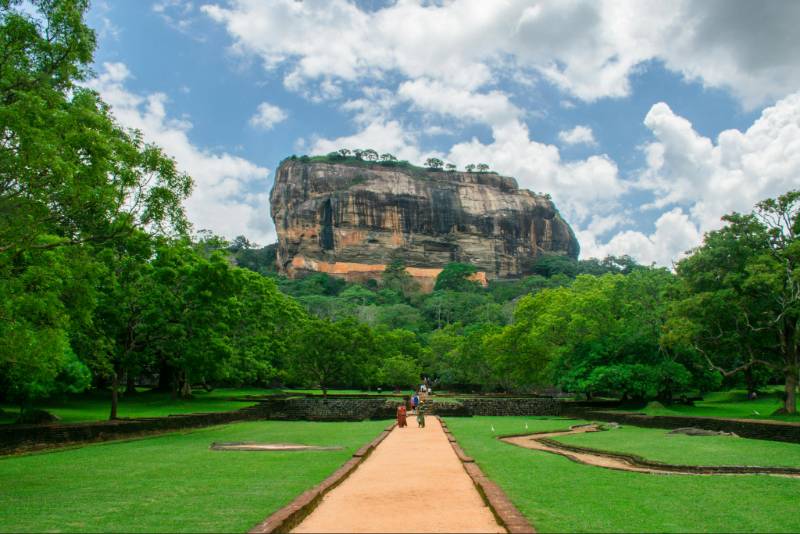
Sigiriya Lion Rock:It rises out of the central plains of Sri Lanka like a stone titan—a massive column of orange rock topped with the ruins of a tragic king’s palace. You’ve seen the photos. You’ve seen the drone shots on Instagram. But let me tell you, as someone who has climbed these 1,200 steps more times than I can count, nothing prepares you for the feeling of standing at the Lion’s Paws, looking up at a fortress built 1,500 years ago. Sigiriya (The Lion Rock) is not just a tourist attraction; it is the heart of Sri Lanka’s “Cultural Triangle.” It is an engineering marvel, a UNESCO World Heritage site, and the setting for one of history’s most dramatic royal feuds. If you are planning a trip to Sri Lanka in 2026, this is the only guide you need. From the dark history of King Kashyapa to the practical logistics of how to get there from the airport, here is everything you need to know. The Story: A King, A Murder, and A Palace in the Sky Before you climb, you must know why this rock exists. Without the story, it’s just a workout with a view. In the late 5th Century (477–495 AD), Prince Kashyapa did the unthinkable: he walled his father, King Dhatusena, up alive to steal the throne. Fearing revenge from his brother Moggallana (the rightful heir), Kashyapa fled the capital of Anuradhapura. He needed a fortress that was impossible to attack. He found Sigiriya. For 18 years, Kashyapa turned this massive rock into a palace of pleasure and protection. He built swimming pools on the summit, painted the rock face with beautiful frescoes, and constructed a massive lion gate to guard the entrance. Eventually, his brother returned with an army. Legend says Kashyapa’s elephant bucked during the battle, and his troops, thinking he was retreating, fled. Too proud to surrender, Kashyapa cut his own throat. The palace was abandoned and swallowed by the jungle for centuries. When you climb, you are walking in the footsteps of a king who had everything, but lost it all. The Climb: What to Expect The Stats: Height: 200 meters (660 feet) Steps: ~1,200 Time to climb: 45 minutes to 1 hour (one way) Difficulty: Moderate. It is steep, but there are handrails and sturdy metal stairs. Phase 1: The Water Gardens Before the ascent, you walk through the landscaped Royal Gardens. These are some of the oldest landscaped gardens in the world, featuring hydraulic systems that still work during the rainy season. It’s a flat, peaceful walk that builds anticipation as the rock looms larger ahead. Phase 2: The Frescoes and Mirror Wall About halfway up, you’ll ascend a spiral staircase to a sheltered pocket in the rock. Here, you’ll find the Sigiriya Frescoes—ancient paintings of celestial maidens (Apsaras). The colors are still vibrant after 1,500 years. Photography Rule: STRICTLY NO PHOTOS allowed in the fresco cave. The flash damages the pigment. Guards are watching! Next is the Mirror Wall. Once polished so highly that the King could see his reflection, it is now covered in ancient graffiti left by visitors between the 6th and 14th centuries. Phase 3: The Lion’s Paws This is the main plateau before the final summit push. Two massive stone paws flank the staircase. Originally, a giant brick lion head swallowed the stairs, but it collapsed centuries ago. Take a break here, drink some water, and prepare for the final, steep ascent. Phase 4: The Summit The top is flat and surprisingly large (1.6 hectares). You’ll see the foundations of the Royal Palace and the Sky Pool. The view is 360 degrees of emerald jungle, distant misty mountains, and the white statue of the Buddha at the nearby Pidurangala temple. Practical Guide: Planning Your Visit (2026 Updated) Sigiriya Lion Rock Entrance Fees (2026) As of early 2026, the ticket prices have been updated. Foreign Adults (Non-SAARC): $35 USD Foreign Children (6-12 years): $20 USD SAARC Nationals: $20 USD (Must show passport) Locals: ~200 LKR Payment Tip: The ticket office accepts credit cards, but the machines often have connectivity issues due to the remote location. Always bring cash (USD or LKR) to be safe. Opening Hours Open: 7:00 AM – 5:30 PM Ticket Counter Closes: 5:00 PM Best Time to Visit Sri Lanka is hot. The rock heats up like a frying pan by noon. Option A (The Best): Be at the gate at 7:00 AM sharp. You will beat the tour bus crowds and the heat. Option B: Go at 3:30 PM. You will catch the golden hour light for photos and watch the sunset from the top. How to Get to Sigiriya Sigiriya is located in the Matale District, right in the center of the island. Most travelers base themselves in Sigiriya town, Dambulla (30 mins away), or Habarana (25 mins away). From Colombo International Airport (BIA) 1. The Fast & Comfortable Way (Taxi/Private Transfer) Time: 3.5 – 4 hours Cost: $70 – $100 USD (one way) This is the best option after a long flight. You can book an Uber/PickMe from the airport or arrange a private driver beforehand (recommended). 2. The Budget Adventure (Bus) Time: 6 – 7 hours Cost: Less than $8 USD total Route: Take the shuttle bus or tuk-tuk from the Airport to the Averiwatta Bus Stand (just outside the airport). Catch the #187 Bus to Colombo Fort (Main Station). From Colombo Fort, take Bus #48 (Kaduruwela) or #49 (Trinco). Get off at Dambulla or Habarana. Take a tuk-tuk the final 15km to Sigiriya (~1,500 – 2,000 LKR). 3. The Scenic Route (Train) Time: 5 – 6 hours + transfer Cost: ~$10 – $20 USD (Reserved seats) There is no train station in Sigiriya. You must take the train from Colombo Fort to Habarana. From Habarana station, it is a 20-minute tuk-tuk ride to Sigiriya. Note: Trains are slower than taxis but offer beautiful views of the countryside. Essential Travel Tips for Sigiriya Water is Life: There are
Sri Lanka’s Grade 6 English Module Controversy Deepens: CID Probe Launched into ‘Inappropriate Link’

buddy net controversy in grade 6 module Colombo, Sri Lanka – December 31, 2025 – The controversy surrounding an inappropriate web link (buddy net) discovered in a newly introduced Grade 6 module of English language has escalated dramatically, with the Ministry of Education formally lodging a complaint with the Criminal Investigation Department (CID) today. This move signals a deeper probe into what top officials suspect might be more than just a technical error, hinting at a potential conspiracy to undermine the government’s ambitious education reforms. Immediate Suspension and Alarming Discovery The incident, which sent ripples of concern across the nation’s educational landscape, came to light after social activist Thilini Shalwin drew attention to a glaring error. It was revealed that a typing mistake, replicated in three separate instances within the new Grade 6 syllabus, redirected users not to the intended educational application, but instead to “Buddy.net,” a social networking platform primarily designed for gay men. Upon receiving the complaint, the Ministry of Education acted swiftly. A preliminary internal review confirmed the presence of the unsuitable content, prompting the immediate suspension of the distribution of all affected printed modules.Secretary to the Ministry of Education Nalaka Kaluwewa confirmed that the module, prepared by the National Institute of Education (NIE), had already been printed and was in the process of distribution when the alarming error was detected. Conspiracy Theories Emerge as CID Takes Over The decision to involve the CID, officially announced on December 31st, underscores the severity with which the Ministry is treating the matter. Secretary Kaluwewa, in a statement to the media following the submission of the complaint, emphasized that the investigation aims to determine whether the inclusion of the inappropriate link was a mere oversight or a deliberate act. Expressing strong suspicions, Kaluwewa suggested that the incident might be part of a calculated effort to discredit the government’s ongoing education reform initiatives. He noted that various parties have previously leveled unsubstantiated accusations against these reforms, and it is crucial to investigate whether a disruptive group intentionally planted the link to lend credence to such claims.“Such an occurrence should never happen within a school curriculum,” Kaluwewa asserted, highlighting the Ministry’s commitment to transparency and accountability. The Broader Context: Sri Lanka’s Sweeping Education Reforms This controversy unfolds against a backdrop of significant educational transformation in Sri Lanka. The government is in the process of implementing a comprehensive module-based and credit-based learning system, set to be introduced for Grades 1 and 6 starting in 2026.These reforms aim to shift the focus from rote learning and examination outcomes to a more interactive, skill-oriented model, incorporating continuous assessments and diverse learning activities. While broadly supported for their progressive vision, the reforms have also faced criticism and opposition from various stakeholders, including teacher unions, regarding aspects like extended school hours and the lack of extensive pilot testing.This pre-existing climate of debate makes the current module controversy particularly sensitive, as any perceived lapse can fuel mistrust and undermine the entire reform process.The transition also involves a change in learning materials, with activity books and simplified module materials replacing traditional textbooks for Grades 1 and 6. Accountability and Future Safeguards The National Institute of Education (NIE) bears the primary responsibility for curriculum and module development. Secretary Kaluwewa confirmed that an internal investigation is actively underway at the NIE to identify any oversight or error that may have occurred during the complex multi-step process of module compilation, examination, editing, and final printing.The problematic website name, according to officials, was technically obscure and only identifiable by someone with specific technical knowledge, raising further questions about its insertion. Approximately 106 modules have been printed under the new reform process, with the erroneous section believed to have been introduced during re-editing and additions for the year 2025, even though much of the content was drafted earlier.The Ministry has assured the public that immediate corrective measures will be taken to rectify defects in these modules, which have been used for teacher training since August, and new safeguards will be implemented to prevent similar incidents in the future. As the CID begins its full-scale investigation, the nation awaits answers, hoping to ensure the integrity of its education system and safeguard the learning environment for its children. The outcome of this probe will undoubtedly have significant implications for public trust and the future trajectory of Sri Lanka’s educational reforms.
Sri Lanka Ends Free Distribution of Plastic Shopping Bags: A Bold Step Towards Sustainability
Sri Lanka ends free plastic bags? In a significant stride towards environmental conservation, Sri Lanka has officially ceased the free distribution of plastic shopping bags across the nation. This landmark regulation, effective November 1, 2025, marks a pivotal moment in the country’s ongoing battle against plastic pollution. The move underscores Sri Lanka’s commitment to fostering a greener future and encouraging more responsible consumption habits among its citizens. The Central Environmental Authority (CEA) announced this new directive, emphasizing its aim to curb the excessive use of single-use plastics and mitigate the pervasive environmental damage caused by disposable polythene waste. Consumers are now urged to embrace reusable shopping bags, actively participating in a national effort towards sustainable consumption. The Policy Shift: What It Means for Consumers and Businesses New Regulations in Detail The regulation, formally published in the Government Gazette on October 1, 2025, specifically targets plastic shopping bags made of low-density polyethylene (LDPE) and linear low-density polyethylene (LLDPE), particularly those with handles, often referred to as “sili-sili bags.” Under the new directive, traders are no longer permitted to provide these bags free of charge to customers. Instead, they are mandated to clearly display the price of such bags at their business premises and ensure the cost is itemized on customer bills. This initiative, driven by the Central Environmental Authority and the Consumer Affairs Authority (CAA), aims to introduce a tangible cost to plastic bag usage, thereby discouraging impulse consumption and promoting a shift towards more sustainable alternatives. Driving Sustainable Consumer Behavior The primary objective of ending the free distribution of plastic bags is to instill environmentally responsible behavior among the public. By requiring consumers to pay for plastic bags, the government hopes to foster a conscious decision-making process at the point of purchase, encouraging individuals to bring their own reusable bags. This measure is a direct appeal to citizens to contribute actively to protecting Sri Lanka’s delicate ecosystems from the persistent threat of plastic waste. A Nation’s Journey Against Plastic Pollution Historical Context of Plastic Bans This latest regulation is not an isolated effort but rather a continuation of Sri Lanka’s longstanding commitment to combating plastic pollution. The nation has progressively implemented various bans on single-use plastics over the past two decades. Key regulatory milestones include bans on polythene less than 20 microns in 2007, thin polythene bags in 2017, and a broader restriction in 2021 covering items such as sachets, inflatable toys, and cotton buds with plastic stems. More recently, in October 2023, nine additional single-use plastic items, including straws, stirrers, cups, and plates, were prohibited from manufacturing, import, sale, and use. While these previous bans demonstrated a clear policy direction, challenges related to implementation, enforcement, and consumer awareness have been noted. The current measure focuses on a direct behavioral change by removing the ‘free’ aspect, hoping to overcome some of these past hurdles. The Environmental Imperative Sri Lanka faces a significant challenge with plastic waste, generating over 1.6 million metric tonnes annually, with single-use plastics accounting for an estimated 70% of this figure. The accumulation of plastic debris not only degrades the natural beauty of the island, impacting vital tourism and fisheries industries, but also poses severe threats to terrestrial and marine ecosystems. Beaches popular with tourists, like Unawatuna and Mirissa, frequently suffer from plastic litter. The new regulation is therefore a critical step in reducing the environmental burden and safeguarding the island’s natural heritage. Broader Vision: Beyond Just Bans Holistic Waste Management Strategies Recognizing that bans alone are insufficient, Sri Lanka is also exploring comprehensive strategies, including Extended Producer Responsibility (EPR) initiatives. These programs aim to hold manufacturers and importers accountable for the entire lifecycle of their plastic products, promoting better packaging designs and take-back systems. The CEA plans to introduce laws requiring companies to collect plastic packaging after use, fostering a closed-loop system for plastic waste management. Complementary efforts include nationwide awareness campaigns, such as those by the Sri Lanka Institute of Packaging (SLIP) in collaboration with Clean Sri Lanka, to educate the public on sustainable packaging and waste management. Furthermore, the government is considering tax incentives and subsidies to encourage eco-friendly practices across various sectors. Looking Ahead: The Path to a Circular Economy The decision to end the free distribution of plastic shopping bags is a testament to Sri Lanka’s unwavering dedication to environmental protection. While this policy represents a crucial advancement, its long-term success will hinge on robust enforcement, consistent public engagement, and the continued development of sustainable alternatives. By fostering a collective responsibility among government, businesses, and citizens, Sri Lanka can accelerate its transition towards a circular economy, ensuring a cleaner, healthier environment for generations to come. This latest move is a powerful reminder that every small step contributes to a monumental change in the fight against global plastic pollution.
Sri Lanka’s Sporting Renaissance: A Flood of Medals at Asian Youth Games and South Asian Athletics

The spirit of Sri Lankan athletics is soaring, ignited by a remarkable series of achievements on the international stage over the past few days. Athletes representing the island nation have brought home a significant haul of medals from both the Asian Youth Games (AYG) in Bahrain and the South Asian Athletics Championships (SAAC) in India, signaling a promising future for the country’s sports landscape. Youthful Glory: Sri Lanka’s Historic Performance at Asian Youth Games 2025 The nation erupted in cheers as the Sri Lankan contingent returned home on Sunday, November 2nd, following their participation in the 3rd Asian Youth Games held in Bahrain. The young athletes delivered an impressive performance, securing a total of seven medals – one Gold, one Silver, and five Bronze – a testament to their dedication and burgeoning talent. A standout moment in Sri Lankan sports history was etched by Lahiru Achintha of St. Aloysius National School, Ratnapura, who clinched the gold medal in the fiercely contested boys’ 1,500-meter event. This victory marks Sri Lanka’s first-ever gold medal at the Asian Youth Games, a monumental achievement celebrated across the island. The jubilant team received a hero’s welcome at the Bandaranaike International Airport (BIA), where they were greeted by Minister of Sports and Youth Affairs Sunil Kumara Gamage, Deputy Minister Sugath Thilakaratne, members of the National Olympic Committee of Sri Lanka (NOCSL), proud teachers, and enthusiastic parents. Beyond Achintha’s golden feat, the Boys Medley Relay Team added a silver medal to the tally, demonstrating collective strength and coordination. Individual brilliance also shone through with Shanuka Costa of Gateway College, Colombo, securing a bronze in the boys’ 400m, and Chathura Dulanjana from Weera Parakrama Secondary School, Yatawatta, earning a bronze in the javelin throw. Nethmi Gimhani (also referred to as Sandeepa Gimhari) claimed a bronze in the girls’ 1500m final, further underscoring the depth of talent emerging from Sri Lanka’s youth ranks. Notably, Kaya Daluwatte also secured a bronze in golf, an achievement made even more remarkable by the tournament rules that prevented a single nation from sweeping all podium positions. It is particularly significant that the athletics team, comprising a lean contingent of just 21 members, was responsible for six of the seven medals. This highlights the immense potential and targeted training within Sri Lanka’s track and field programs, especially when viewed against the backdrop of a larger 100-athlete delegation competing across 12 sports. The National Olympic Committee of Sri Lanka (NOCSL) has consistently reiterated its commitment to empowering young athletes and providing them with invaluable international exposure, a strategy that is now clearly bearing fruit. Dominance in the Region: South Asian Athletics Championships 2025 While the Asian Youth Games celebrated emerging talents, Sri Lankan athletes simultaneously showcased their prowess at the 4th South Asian Senior Athletics Championships in Ranchi, India. The nation’s contingent delivered an outstanding performance, finishing second overall with a remarkable haul of 40 medals, including 16 Gold, 14 Silver, and 10 Bronze. The significant contribution of the Sri Lanka Army athletes to this success was officially recognized, with 30 of the 59 national representatives hailing from the armed forces. Lieutenant General Lasantha Rodrigo, Commander of the Army, recently felicitated these medalists, highlighting their dedication and presenting cash incentives to encourage future triumphs. Among the star performers were Shafiya Yamick, who clinched gold in both the women’s 100m and 200m events, setting a new meet record in the 200m. Chamod Yodasinghe matched her sprinting excellence, securing gold in the men’s 100m. Other notable gold medalists include Tharindu Dasun Samaraweera in high jump, Pasindu Malshan in men’s triple jump, and Madushani Herath, who not only won gold in women’s triple jump with a new meet record but also added a gold in the long jump. Further gold medals were secured by Dasuni Kaushalya (Women’s 400m Hurdles), Rumesh Tharanga (Men’s javelin throw), Dilhani Lekamge (Women’s javelin throw), Harsha Karunarathne (Men’s 800m), and Methmi Wijesuriya (Women’s 10,000m). The collective strength of the Sri Lankan team was also evident in their gold-medal-winning performance in the Men’s 4x400m relay. Looking Ahead: Sustaining the Momentum These recent successes underscore a critical juncture for Sri Lankan sports. While the athletes have demonstrated their capability on the continental and regional stages, the challenge now lies in sustaining and building upon this momentum. The 14th South Asian Games, now rescheduled for November 2025 in Pakistan, presents another significant opportunity for Sri Lanka to reaffirm its sporting prowess. Preparations are already underway, with Sri Lanka Athletics actively identifying and training a national pool of over 50 athletes for upcoming international events, including the South Asian Senior Athletic Championships and other major competitions in 2025. However, the broader ecosystem of sports governance remains crucial. Recent reports of funding suspensions to the National Olympic Committee of Sri Lanka by the International Olympic Committee (IOC) and the Olympic Council of Asia (OCA), due to allegations of corruption and governance failures, highlight areas needing urgent reform. Encouragingly, new 2025 regulations for National Sports Associations in Sri Lanka aim to enhance transparency, accountability, and integrity, signaling a concerted effort to create a more robust and ethical sporting environment. The remarkable achievements of Lahiru Achintha, Shafiya Yamick, and their fellow medalists are not just individual triumphs; they are beacons of hope and inspiration for a nation passionate about sports. With continued investment in grassroots development, athlete welfare, and sound governance, Sri Lanka is well-positioned to achieve even greater success at future South Asian and Asian Youth Games, solidifying its place as a formidable force in regional athletics.